
Practical guides · questions
Orange Stains, Rotten-Egg Odors or Blue-Green Marks: What Should You Test?
Orange stains, sulfur odors and blue-green marks can guide an investigation—but they cannot identify every contaminant. Learn what to observe, which tests to discuss and how results shape treatment.
What you’ll learn
- Stains and odors are clues, not diagnoses, and cannot establish drinking-water safety.
- Hot-only odor, odor at one sink and odor throughout the home call for different investigations.
- Iron, manganese, hydrogen sulfide, nuisance bacteria and corrosion require different testing questions.
- Choose treatment by measured water chemistry, equipment limits and household demand—not stain color alone.
An orange ring in the tub, a rotten-egg smell at the faucet or blue-green marks beneath a tap can make choosing a filter feel urgent. But similar symptoms can come from different sources, and the wrong treatment may leave the underlying issue untouched. Start with observations, then use Water Testing to investigate the cause. Appearance and smell cannot establish drinking-water safety—even water that looks clear may need attention.
Start with safety, not the stain
Keep two questions separate: what is causing the nuisance, and what testing is needed to evaluate drinking-water safety? Iron testing might explain a rusty tub without answering whether bacteria, nitrate or other contaminants are present.
For private wells, an annual baseline includes total coliform bacteria, nitrate, pH and total dissolved solids. Additional testing depends on the property, nearby activities and household circumstances. A change in color, taste or odor is a reason to test outside that routine schedule.
For private well testing in Moore County, ask the local health department about additional contaminants of concern. If results identify harmful germs or chemicals, use another safe drinking-water source and obtain guidance on corrective action.
Match the observation to a testing question
Before shopping for equipment, record where and when the symptom appears. The pattern can help narrow the investigation, but it cannot establish a cause or concentration. This comparison is a starting point for discussing tests—not a treatment prescription.
Common observations and useful testing questions. More than one cause can occur at the same property.
| What you notice | Possible explanation | What to discuss |
|---|---|---|
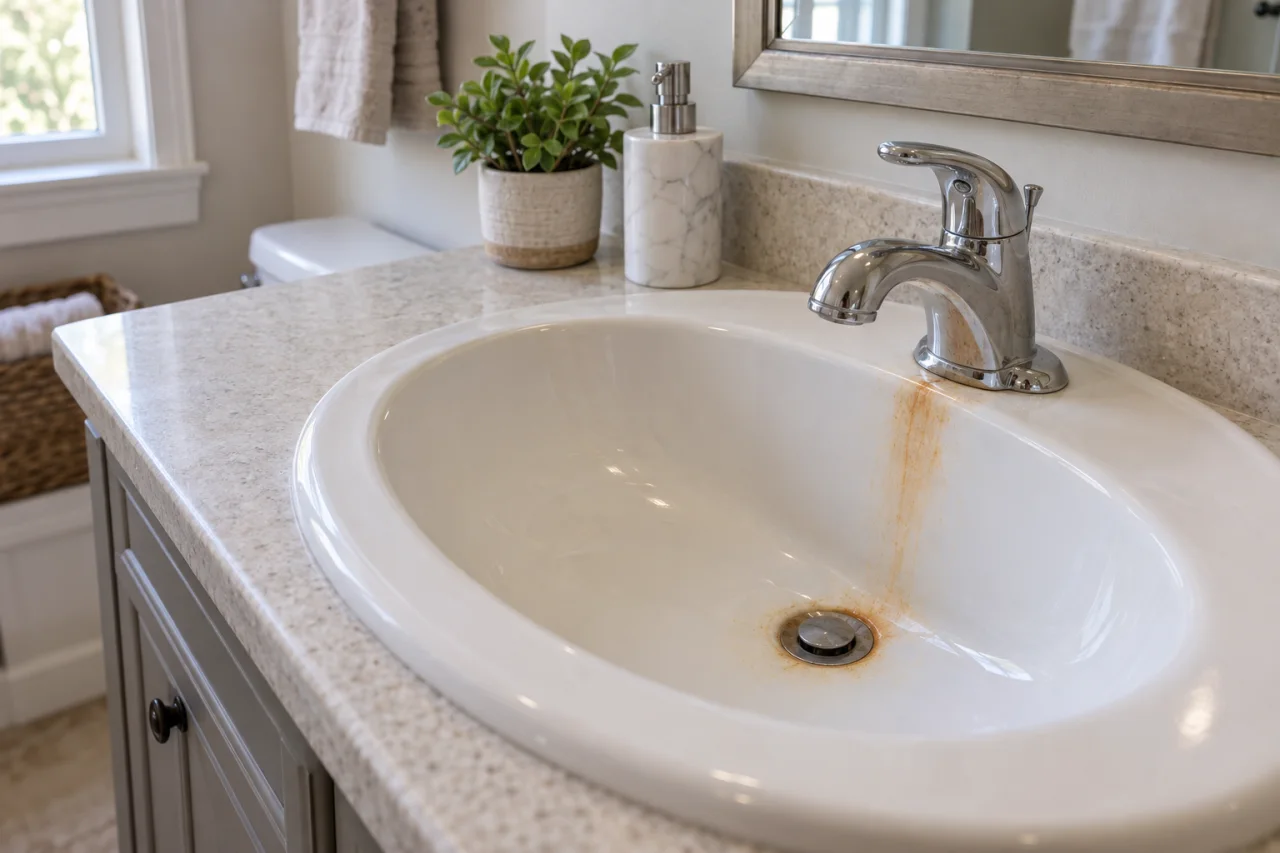
| Orange-brown stains or sediment | Dissolved or oxidized iron | Iron, manganese and pH; discuss whether iron is dissolved or particulate |
| Dark stains or black particles | Manganese or sulfide-related deposits | Manganese and pH; hydrogen sulfide if odor accompanies deposits |
| Rotten-egg odor in hot water only | Water-heater reactions or bacterial activity | Compare hot and cold water and assess the heater before choosing whole-house treatment |
| Rotten-egg odor in hot and cold water | Hydrogen sulfide in the supply or water system | Hydrogen sulfide concentration and related water chemistry |
| Rust-colored slime or recurring musty odor | Possible iron bacteria | Discuss nuisance-bacteria assessment separately from coliform and E. coli testing |
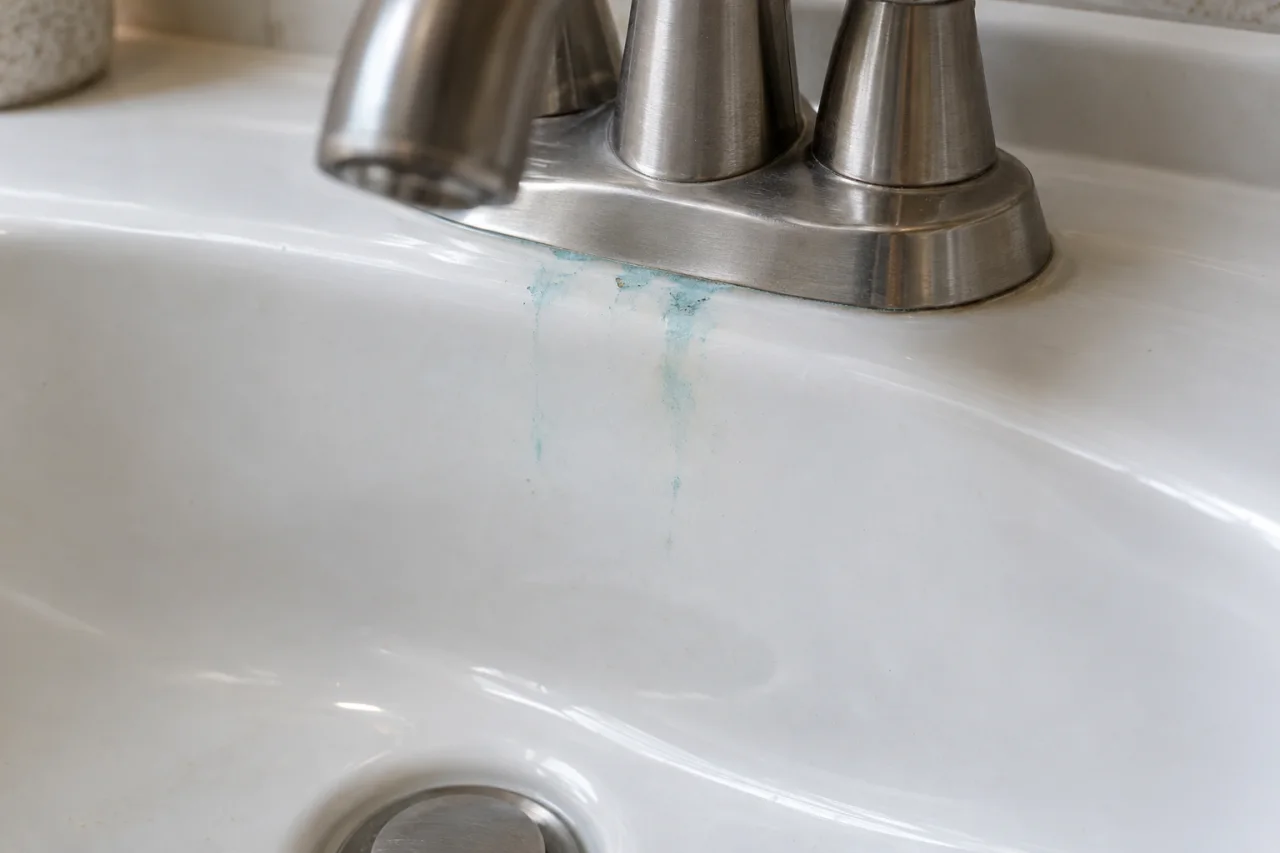
| Blue-green fixture marks | Copper released through corrosion | Copper, pH, alkalinity and hardness; discuss lead testing where plumbing warrants it |
Orange and dark stains: concentration and form matter
Iron and manganese can be dissolved in water that initially looks clear. After exposure to air, orange-brown or dark particles may develop. Water containing particles immediately presents a different filtration question from water containing dissolved metals.
Ask for measured concentrations, not simply a finding that iron is present. Treatment selection depends on concentration, form and pH. A sediment cartridge can catch suitable particles but is not equivalent to removing dissolved iron. A softener may be appropriate for some dissolved iron or manganese within manufacturer limits; other conditions may require oxidation followed by filtration.
Do not dismiss manganese as only a housekeeping issue. It also has health-based guidance, so review the actual result rather than judging it by stain intensity.

Rotten-egg odor: compare hot, cold and location
Rotten-egg odor commonly involves hydrogen sulfide, but its source matters. Hot-only odor can develop through reactions involving a water heater’s protective anode or through bacterial activity in the heater. Odor affecting hot and cold water suggests a wider supply or plumbing-system investigation, though it does not prove the well itself is responsible.
A smell noticed only over one sink may originate in the drain. Moving a glass of water away from the sink helps distinguish the two without tasting it.
If treatment is needed, hydrogen sulfide concentration helps determine the approach. Activated carbon can suit less severe conditions; stronger problems may require oxidation and filtration. Do not remove a heater’s protective anode as an improvised fix—discuss compatible options and warranty implications with a qualified service provider.
- Compare hot and cold water separately at more than one fixture.
- Record whether the odor is strongest after several hours without water use.
- Check whether the smell follows water in a clean glass away from the sink.
- Note recent changes to the water heater or treatment equipment.
Slime and musty smells need a separate bacteria discussion
Rust-colored slime in a toilet tank, recurring musty odors or fluffy deposits can suggest iron bacteria. These organisms can create buildup and contribute to clogging. They are different from the indicator bacteria measured by routine coliform and E. coli tests.
A negative coliform result therefore does not rule out nuisance bacteria. Equally, suspected iron bacteria do not establish that the water is safe. Discuss the slime and odor pattern alongside the separate safety-testing results.
Established growth can be difficult to eliminate. Ask whether the investigation needs to include the well and plumbing rather than only equipment at the house. Improving water downstream does not necessarily resolve deposits elsewhere in the system.
Blue-green marks: investigate water and plumbing together
Blue-green marks can indicate copper released from plumbing. Low pH is one possible contributor, but corrosion assessment should also consider alkalinity, hardness and the plumbing materials. A pH reading alone does not measure copper or lead exposure.
Ask about testing water at the drinking-water faucet as well as evaluating the source water. Household plumbing can affect what reaches that tap. Follow the laboratory’s sampling instructions: a sample intended to investigate plumbing-related metals may require different preparation from another water-quality sample.
If corrosion is confirmed, the discussion should include both chemistry correction and plumbing condition. Removing a visible stain is not the same as correcting metal release.
Choose treatment within its actual limits
The Water Knight offers Water Sanitizer systems, including Sanitizer Plus®. The manufacturer describes softening, iron and manganese removal, low-pH correction and control of odors caused by nuisance bacteria. Those functions do not make every model suitable for every well.
The specification sheet distinguishes models and sets water-chemistry requirements. Iron and manganese removal depends on their form, pH and other conditions. It also warns that pre-oxidation can create particles too fine for the system to filter. Higher flow can reduce pH-adjustment performance.
Ask which exact model fits the test results, whether pretreatment is needed and what performance is expected at household demand. Comparing Sanitizer Plus®, a water softener and UV helps separate different treatment jobs. Do not treat nuisance-odor control as proof of drinking-water disinfection or assume that one unit addresses contaminants outside its stated claims.
Make the assessment useful—and plan for follow-up
Good sampling is part of a useful answer. Use laboratory-supplied containers and follow the instructions rather than collecting everything in a household jar. For hydrogen sulfide, ask about prompt or on-site measurement because the gas can escape before delayed analysis.
Keep the original results so future tests can be compared. Returning stains or odors deserve investigation; do not assume they always mean the same problem. For Sanitizer Plus®, follow the model-specific salt and cleaning instructions, and do not add cleaning products without checking compatibility.
The Water Knight provides Water Testing for homes and businesses in West End and Moore County, with water treatment visits by arrangement. Bring your observations and any previous reports to the discussion. Understanding the path from a water sample to a treatment plan can help you ask better questions before approving equipment.
- Confirm which tests are included and which require separate laboratory analysis.
- Ask which sample locations will answer the source-water, treatment and plumbing questions.
- Request instructions for containers, collection, preservation and delivery.
- Ask how results will be checked after treatment and when repeat testing is appropriate.
- Clarify salt, backwashing, filter replacement and other maintenance responsibilities.
Questions & answers
Can clear, odorless well water still have a problem?
Yes. Potentially harmful contaminants may have no noticeable color, taste or smell. A stain-and-odor investigation does not replace routine well testing or additional tests recommended for your property.
Does a rotten-egg smell mean my well needs whole-house treatment?
Not necessarily. Hot-only odor can originate in the water heater, while odor confined to one sink may come from its drain. Odor in both hot and cold water at several fixtures calls for a broader investigation before equipment is selected.
Does a negative coliform test rule out iron bacteria?
No. Coliform and E. coli tests address different questions from an iron-bacteria investigation. Nuisance bacteria can be present even when those indicator tests are negative.
Will a water softener remove orange stains and sulfur odor?
A suitable softener may remove some dissolved iron or manganese within its application limits. It is not a universal treatment for oxidized particles, hydrogen sulfide, established bacterial slime or corrosion. Test results should determine whether softening, filtration or another approach fits.
Should I add iron-cleaning salt if stains return?
Check the exact equipment manual first. Some Sanitizer Plus® models prohibit iron-cleaning salt and cleaning additives. Report returning stains or odors and review salt level, regeneration and water quality rather than adding an unapproved product.
Sources & further reading
- North Carolina DHHS: Private Well Water and Your Health
Supports the distinction between sensory observations and safety: potentially harmful well-water contaminants may be invisible, odorless and tasteless. Also supports contacting the local environmental health program for North Carolina well-testing guidance. ([epi.dph.ncdhhs.gov](https://epi.dph.ncdhhs.gov/oee/docs/PrivateWellWaterFactST.pdf))
- CDC: Guidelines for Testing Well Water
Supports annual testing for total coliform bacteria, nitrate, pH and total dissolved solids; additional testing after changes in taste, color or smell; state-certified laboratory testing; and safe alternative drinking water and health-department guidance when harmful contaminants are found. ([cdc.gov](https://www.cdc.gov/drinking-water/safety/guidelines-for-testing-well-water.html))
- Penn State Extension: Iron and Manganese in Private Water Systems
Supports orange-brown iron staining, dark manganese staining, initially clear water developing particles, dissolved versus oxidized metals, concentration- and pH-dependent treatment selection, softener limitations, oxidation and filtration, and the existence of a manganese health advisory. ([extension.psu.edu](https://extension.psu.edu/iron-and-manganese-in-private-water-systems?utm_source=openai))
- Penn State Extension: Hydrogen Sulfide (Rotten Egg Odor) in Water Wells
Supports hydrogen sulfide odor, hot-water-only odor associated with water-heater anode reactions, concentration-based treatment selection, carbon and oxidation treatment tradeoffs, and prompt testing because hydrogen sulfide can escape from water. ([extension.psu.edu](https://extension.psu.edu/hydrogen-sulfide-rotten-egg-odor-in-water-wells?utm_source=openai))
- University of Georgia Extension: Iron (Manganese) and Sulfur Bacteria in Your Well Water
Supports distinguishing nuisance iron and sulfur bacteria from coliform and E. coli indicators, rusty slime and musty odors, stronger odors after non-use, possible water-heater bacterial activity, clogging and the difficulty of eliminating established growth. ([extension.uga.edu](https://extension.uga.edu/publications/detail.html?number=B1457&title=iron-manganese-and-sulfur-bacteria-in-your-well-water))
- Mississippi State University Extension: Assessing and Protecting Water Quality in the Home and Community
Supports symptom-based testing questions for stains and odors, copper and corrosion assessment using pH, hardness and alkalinity, and moving a glass away from the sink to distinguish water odor from drain odor. ([extension.msstate.edu](https://extension.msstate.edu/publications/assessing-and-protecting-water-quality-the-home-and-community))
- U.S. EPA: Home Water Testing Facts
Supports investigating household-faucet lead separately from system-wide information, identifying contaminants before buying treatment, keeping water-quality records, and following laboratory requirements for sample containers, collection, preservation and handling. ([epa.gov](https://www.epa.gov/sites/default/files/2015-11/documents/2005_09_14_faq_fs_homewatertesting.pdf))
- Water-Right: Sanitizer Plus® Series Conditioner
Supports the manufacturer's stated Sanitizer Plus® functions: softening, iron and manganese removal, low-pH correction and control of odor caused by nuisance bacteria. These are product claims, not a finding that a particular well is suitable. ([water-right.com](https://www.water-right.com/products/sanitizer-plus/))
Prepared and automatically checked on . Conditions, costs and requirements can change. Ask about the details that apply to your situation.
Continue reading
Helpful next reads
Private Well Testing in Moore County: What to Test and When
Start with annual indicators, then build in broader North Carolina testing reminders and additional tests based on your well's history, surroundings and changes.
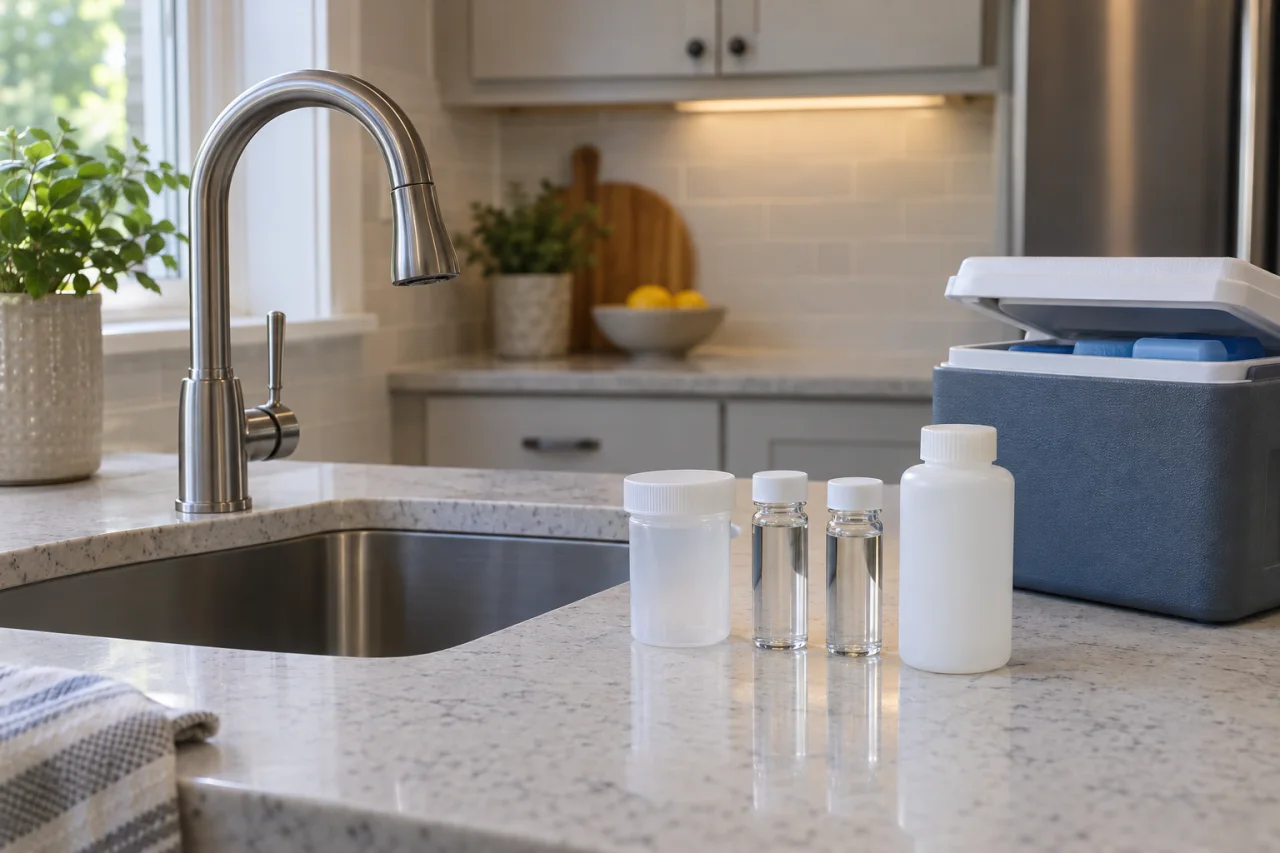
From Water Sample to Treatment Plan: Understanding the Testing Steps
A useful water test starts before the bottle is filled. Learn how panel selection, sampling conditions and laboratory reporting shape a practical treatment decision.
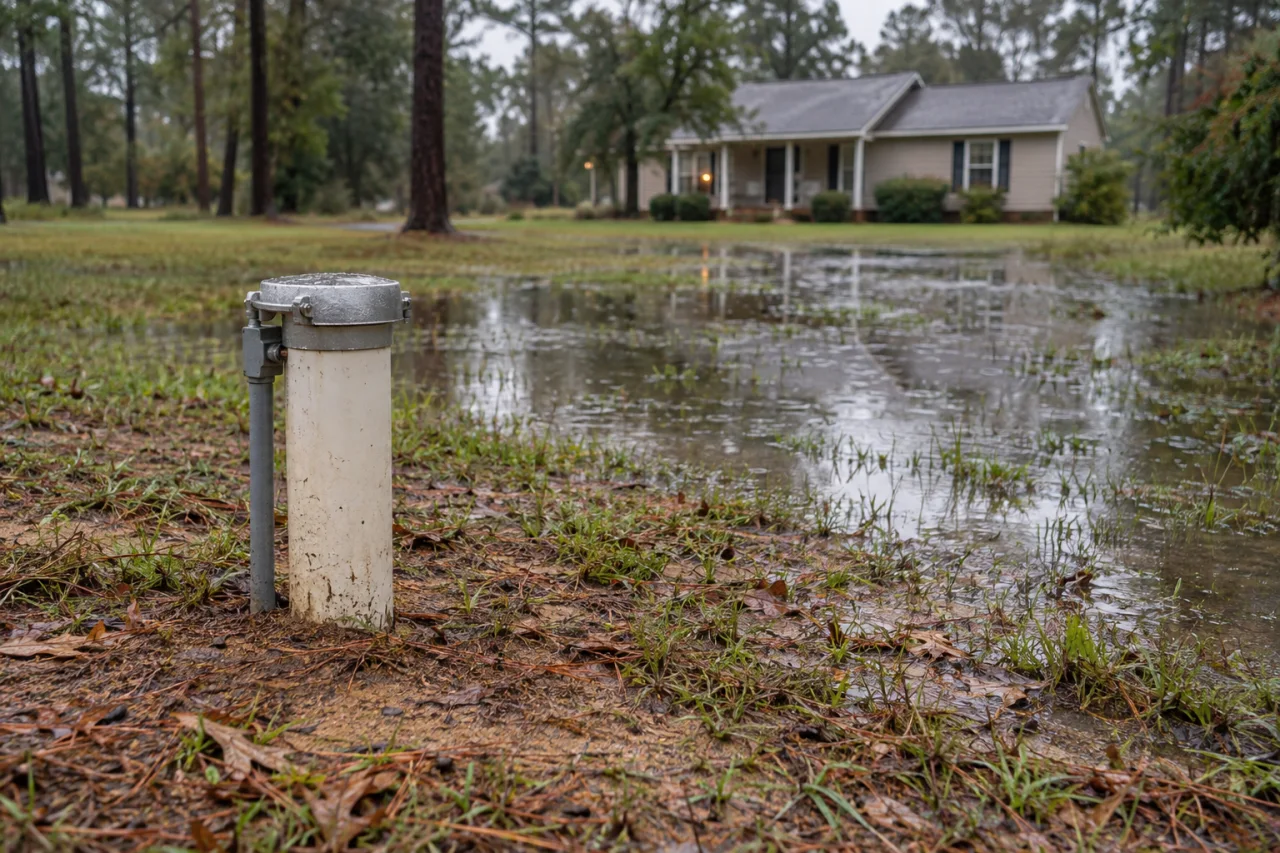
What Should You Do With Well Water After Flooding or a Power Outage?
A working pump does not establish water safety. Separate power loss from flood exposure, choose temporary water carefully, and use appropriate assessment and testing before resuming use.