
Practical guides · comparison
Pitcher, Refrigerator Filter or Reverse Osmosis: Compare the Actual Claims
Your current filter may be enough—or it may address a different problem. Compare certified reduction claims, delivery, installation and replacement needs before deciding to upgrade.

What you’ll learn
- Choose by the exact system-and-cartridge reduction claims, not by pitcher, refrigerator or RO format alone.
- Taste improvement and low TDS readings do not establish contaminant-specific removal or water safety.
- Compare rated capacity, usable flow, installation requirements and recurring maintenance together.
- InterFlo® QuadPro SST has documented reduction claims and operating limits; those conditions matter as much as the headline features.
A pitcher is not automatically inadequate, a refrigerator filter is not automatically limited to taste, and reverse osmosis is not a promise to remove everything. The useful question is narrower: does your exact filter reduce the substances you care about, under the conditions in your home? For Moore County households, a sound comparison starts with water information and model-specific claims, then considers daily demand, installation and upkeep.
1. Decide what you want the filter to reduce
Start with a specific objective: improve chlorine taste, reduce lead, address nitrate, or investigate something else identified in testing. Those are different jobs. Buying a more elaborate system without defining the job can add expense without answering your original concern.
For a public-water connection in West End or elsewhere in Moore County, review the report from the utility that actually supplies your address. How to Read Your Moore County Water Quality Report explains how to approach that information. For a private well, use appropriate testing and ask the health department about a state-certified laboratory.
Water Testing can help you begin that discussion. Bring existing results and the name of your current filter. A countywide description cannot establish what is present at your particular tap, and an unpleasant taste does not identify its cause.
2. Read the claim, not just the standard number
A standard number describes a testing framework, not a universal removal promise. NSF/ANSI 42 addresses aesthetic claims such as chlorine taste and odor. NSF/ANSI 53 addresses specific health-related reduction claims. NSF/ANSI 58 covers reverse osmosis systems; TDS reduction is required, while claims such as lead, fluoride and nitrate/nitrite reduction are optional.
These numbers are not quality rankings. Certification to 58 does not automatically mean a system handles every substance addressed by 53, and certification to 53 does not mean every available health-related claim applies.
Pitcher and refrigerator formats can include certified lead-reduction options. Conversely, a filter that only documents taste improvement should not be credited with lead reduction. Check the installed cartridge, not merely the appliance brand or a replacement package that says it fits.
- Identify the exact system model and replacement cartridge.
- Find the independent certification listing and matching performance data sheet.
- Locate the named substance you want to reduce, not just a general certification logo.
- Read capacity, flow, incoming-water limits and replacement instructions.
3. Compare the three formats fairly
All three formats can be reasonable point-of-use choices. The deciding factors are whether the exact product addresses your target substances and whether its delivery method fits your household. Drinking Water Systems are worth exploring when you want a dedicated treated-water tap, but an upgrade is not automatically necessary if your current filter meets your documented needs.
Use this comparison to narrow the format, then compare individual models. Benefits shown here describe the format, not a promise that every product in the category has the same reduction performance.
Three drinking-water filter formats: applicability, benefits and ownership tradeoffs
| Option | Benefits and best fit | Limitations and cost considerations |
|---|---|---|
| Filter pitcher | Useful for manually prepared batches; no permanent plumbing connection. Some models carry health-related reduction claims. | Requires refilling and waiting for filtration. Compare cartridge cost, rated gallons and replacement frequency; capacity and claims vary by model. |
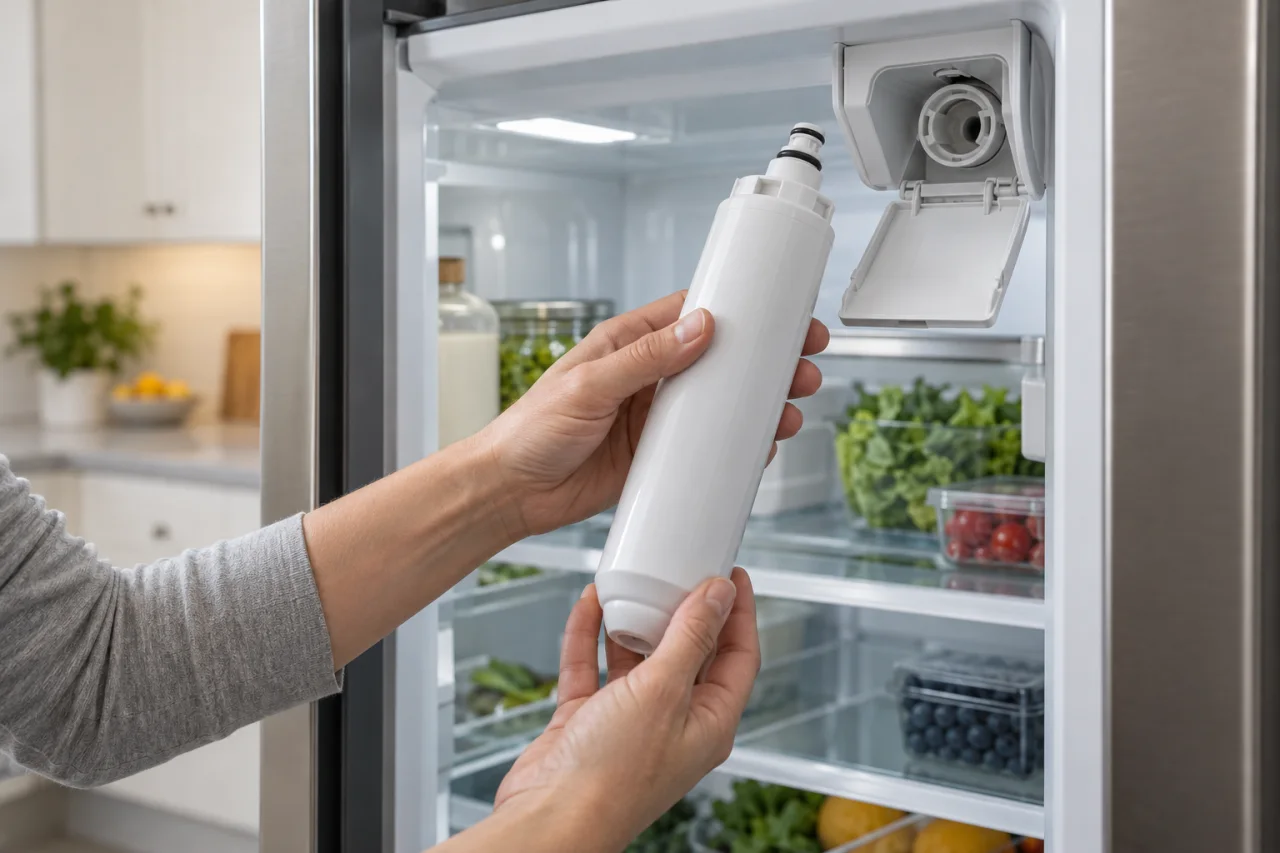
| Refrigerator filter | Convenient water and ice through a compatible appliance. Some exact cartridge models have certified lead-reduction claims. | Limited to the appliance outlets. Confirm compatibility and claims; include ongoing cartridge purchases and the manufacturer’s replacement schedule. |
| Under-sink reverse osmosis | Dedicated drinking-and-cooking outlet; useful when the model’s documented membrane-system claims match the treatment goal. | Requires installation space, water and drain connections, cartridges and a membrane. Some models, including InterFlo® QuadPro SST, also require power. |
4. Keep taste and TDS readings in perspective
Better flavor is a worthwhile result, but it is not a contaminant test. Harmful substances may leave water looking, smelling and tasting unchanged. Equally, an objectionable taste does not by itself establish a health hazard.
A handheld total dissolved solids meter measures electrical conductivity and converts that reading into an estimate of dissolved solids. It does not identify which substances are present. Naturally occurring mineral ions can contribute to the reading, and a low number does not establish that water is free of harmful contaminants.
TDS reduction is a useful RO performance measure when interpreted within the system’s instructions. It is not a substitute for contaminant-specific evidence. Do not reject a filter solely because its TDS reading barely changes, or declare an RO system successful for lead or nitrate solely because its reading drops.
5. Match delivery and installation to everyday use
Capacity and flow answer different questions. A cartridge’s rated treated volume concerns how much water it can process under its stated conditions. Flow concerns how quickly water is delivered. A pitcher’s storage volume is different again: it tells you how much prepared water is available before another refill.
For RO, a daily-production rating should not be read as the faucet’s instantaneous delivery rate. Incoming temperature, pressure and dissolved-solids concentration affect output. Ask how the proposed unit will serve ordinary tasks: filling several bottles, preparing coffee and drawing cooking water close together.
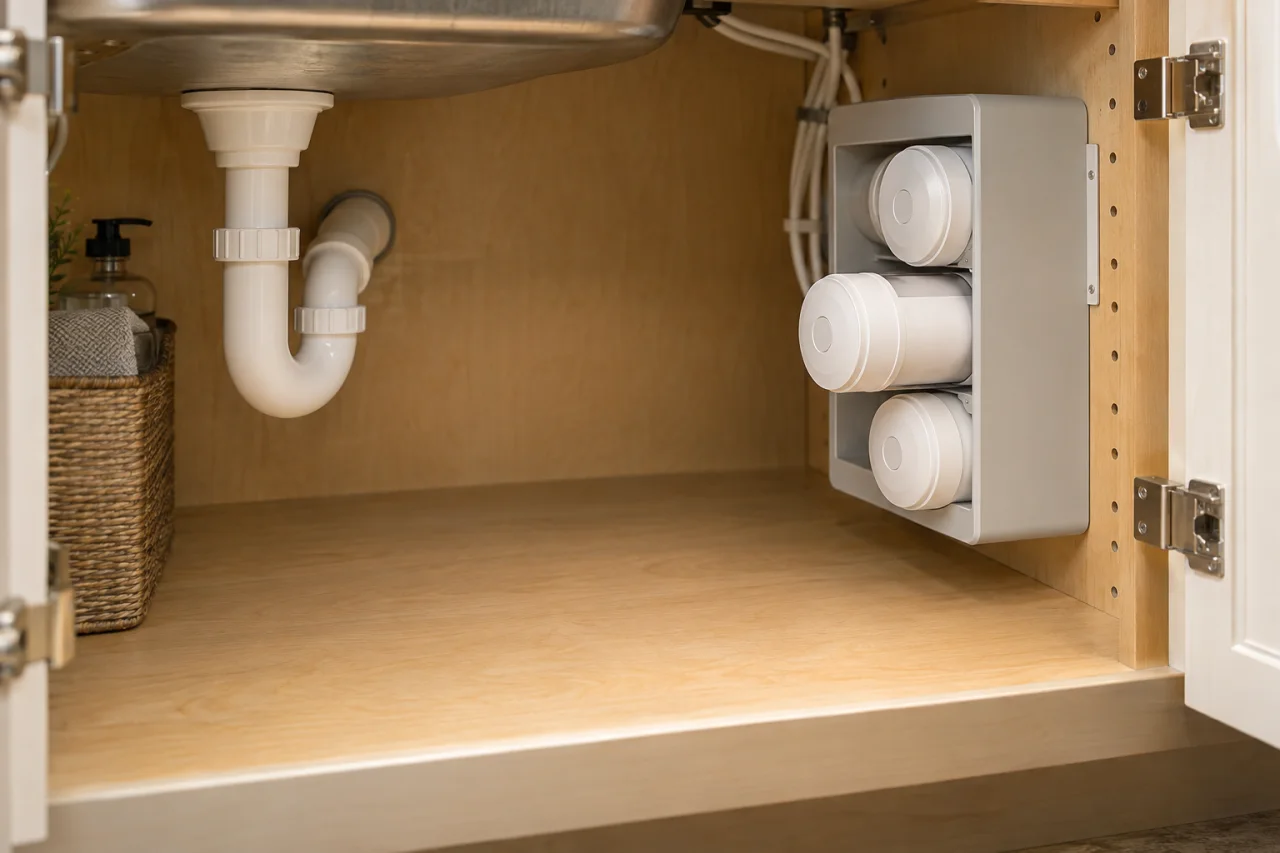
Before choosing an under-sink system, discuss cabinet access, cartridge-removal space, faucet placement, supply and drain connections, and any electrical requirement. These are planning questions, not evidence that every kitchen needs alterations. Compare purchase and installation costs alongside replacement parts, service labor and RO reject water. The Ongoing Costs of a Reverse Osmosis Drinking Water System offers a framework for that longer-term comparison.
6. What InterFlo® QuadPro SST documentation establishes
The Water Knight installs InterFlo® QuadPro SST, a tankless under-sink RO system. Water-Right identifies WQA certification against NSF/ANSI 58 and CSA B483.1 for the claims specified in its performance data sheet, including fluoride, lead and nitrate reduction.
The manual lists a rated service flow of 0.45 gallons per minute and a working-pressure range of 40–80 psi. These are equipment specifications, not a guaranteed household fill rate. Nitrate/nitrite reduction has additional feed-concentration conditions and requires supply pressure of at least 40 psi.
Water-Right also publishes a 60% efficiency rating and 74.5% recovery rating. Those are distinct metrics, not interchangeable promises about every installation’s water use. Ask which measurement supports a proposed water-use comparison.
Its documented claim list should remain the boundary of the comparison. Do not add an unlisted claim simply because the system uses RO. The manual also warns that microbiologically unsafe water requires adequate disinfection before or after treatment.
7. Choose a replacement routine you can sustain
Every format needs maintenance. Keep the model instructions, record cartridge changes and follow applicable time or volume limits. Do not wait for bad taste to return before replacing a cartridge intended to reduce a substance you cannot taste.
InterFlo® QuadPro SST documentation gives general replacement intervals of 12 months for its pre- and post-composite cartridges and 48 months for the membrane. Incoming water quality, pretreatment and use can change the appropriate schedule; these intervals are not lifespan guarantees.
The practical decision is to keep a suitable, maintained filter, replace it with a better-matched model, or investigate the water further. The Water Knight offers Water Filtration and drinking-water treatment in West End and Moore County. Bring your results, cartridge model and daily-use priorities to the conversation so the proposed equipment can be compared against a defined need.
- What evidence shows that my current filter does or does not meet my treatment goal?
- Which exact system and replacement cartridges are proposed?
- What installation work, consumables and service labor are included?
- What maintenance and verification will my water conditions require?
Questions & answers
Can a pitcher or refrigerator filter reduce lead?
Yes, some models have certified lead-reduction claims. Verify the exact filter and compatible system in the certifier’s listing and performance data sheet. A chlorine taste-and-odor claim alone does not establish lead reduction.
Does a low TDS reading mean my water is safe?
No. A handheld TDS meter estimates dissolved solids from electrical conductivity. It does not identify individual contaminants or establish microbiological safety. Use appropriate testing for the substances you want to evaluate.
Does every reverse osmosis system reduce nitrate and fluoride?
Do not assume so. NSF/ANSI 58 requires TDS reduction, but nitrate/nitrite and fluoride reduction are optional claims. Check the exact model’s documented claims and operating conditions.
Can InterFlo® QuadPro SST treat microbiologically unsafe well water by itself?
Its manual warns against use with microbiologically unsafe water, or water of unknown quality, without adequate disinfection before or after the system. Investigate the water source and disinfection needs rather than treating an RO purchase as the complete answer.
How often should I replace drinking-water filters?
Follow the instructions for the installed model, including any time and treated-volume limits. InterFlo® QuadPro SST documentation gives general intervals of 12 months for its pre- and post-composite cartridges and 48 months for the membrane, with schedules varying by incoming water quality, pretreatment and use.
Sources & further reading
- CDC: About Choosing Home Water Filters
Explains selecting filters around testing and target substances, reviewing public-water reports, private-well testing, the limitations of taste and smell, and maintaining filters according to manufacturer instructions. ([cdc.gov](https://www.cdc.gov/drinking-water/prevention/about-choosing-home-water-filters.html))
- NSF: Standards for Water Treatment Systems
Defines NSF/ANSI 42, 53 and 58 and explains that standard numbers are not rankings. Supports distinguishing aesthetic claims from specific health-related claims. ([nsf.org](https://www.nsf.org/consumer-resources/articles/standards-water-treatment-systems))
- NSF/ANSI 58: Reverse Osmosis Drinking Water Treatment Systems
Identifies TDS reduction as required under NSF/ANSI 58 and lists lead, fluoride and nitrate/nitrite reduction among optional claims. ([nsf.org](https://www.nsf.org/knowledge-library/nsf-ansi-58-reverse-osmosis-drinking-water-treatment-systems))
- EPA WaterSense: Guide to Selecting Water Treatment Systems, November 2024
Supports the format comparison, manual pitcher filling, refrigerator dispensing, dedicated under-sink outlets, matching treatment quantity to need and considering purchase, operation and maintenance costs. ([epa.gov](https://www.epa.gov/system/files/documents/2024-11/ws-products-home-water-treatment-guide_508.pdf))
- EPA: A Consumer Tool for Identifying Point of Use Drinking Water Filters Certified to Reduce Lead
Covers pitcher and refrigerator point-of-use filters, independent lead-reduction certification and finding specific claims on packaging and performance data sheets. Used for claim-verification principles, not as a current product-shopping list. ([epa.gov](https://www.epa.gov/sites/default/files/2018-12/documents/consumer_tool_for_identifying_drinking_water_filters_certified_to_reduce_lead.pdf))
- Aquasana: What Is a TDS Meter and Do You Need One?
Explains conductivity-based TDS estimation and why the reading does not identify individual substances or establish safety. Supports only the TDS discussion, not broader treatment recommendations. ([aquasana.com](https://www.aquasana.com/info/tds-meter-what-is-it-and-do-you-need-it-pd.html))
- Water-Right: InterFlo® QuadPro SST Tankless Reverse Osmosis System
Manufacturer description of the tankless design, WQA certification statement, named fluoride, lead and nitrate claims, and separate efficiency and recovery ratings. ([water-right.com](https://www.water-right.com/products/interflo-quadpro-sst-tankless-reverse-osmosis-system/))
- InterFlo QuadPro SST Installation Guide and Owner’s Manual, Revision November 2024
Documents installation and power needs, rated service flow, pressure limits, nitrate/nitrite conditions, performance limitations, microbiological warning, replacement intervals and effects of feed-water conditions on flow. ([water-right.com](https://www.water-right.com/wp-content/uploads/2024/09/QuadPro-SST-Manual.pdf))
Prepared and automatically checked on . Conditions, costs and requirements can change. Ask about the details that apply to your situation.
Continue reading
Helpful next reads
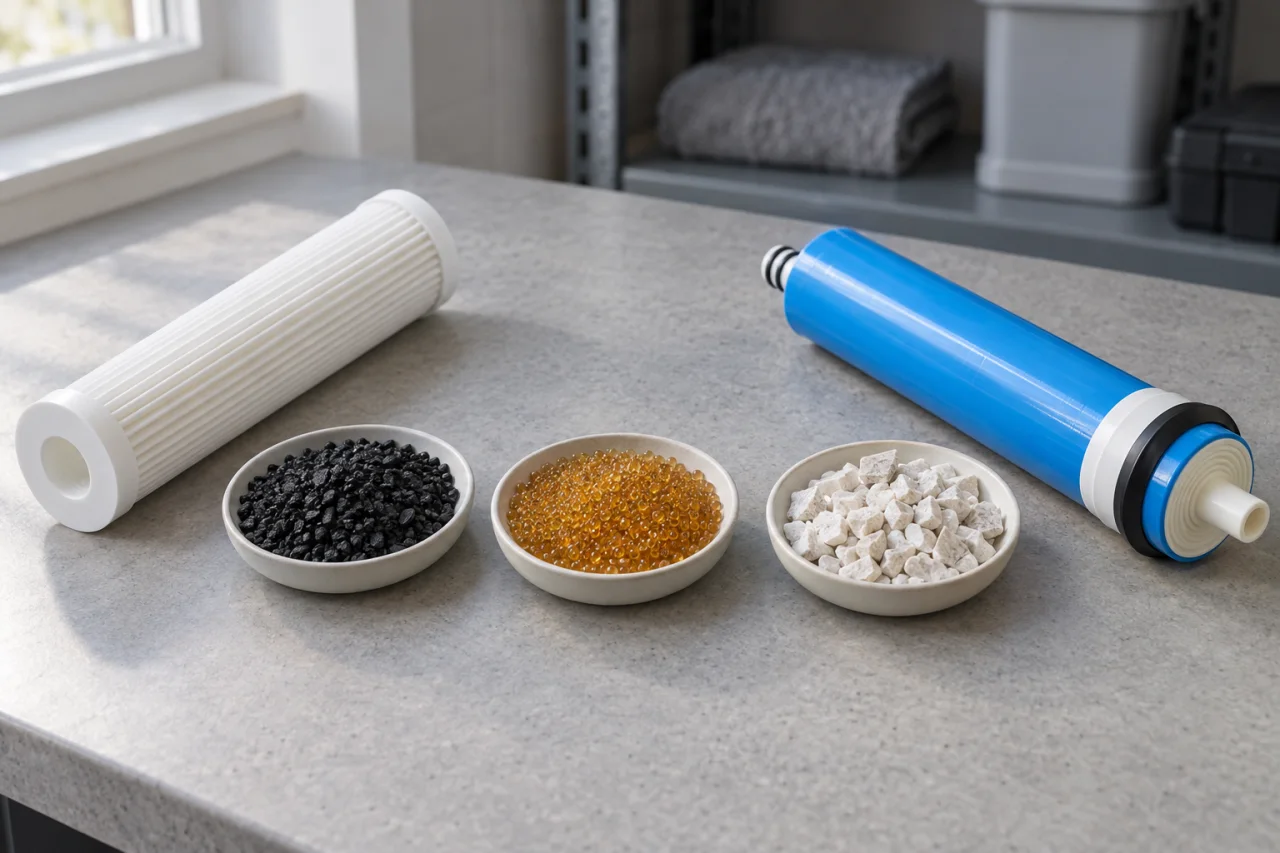
Carbon, Resin, Membranes and Mineral Media: A Water Treatment Options Guide
The material inside a treatment system determines its job. Compare carbon, resin, membranes and mineral media by water results, flow needs, upkeep and discharge.
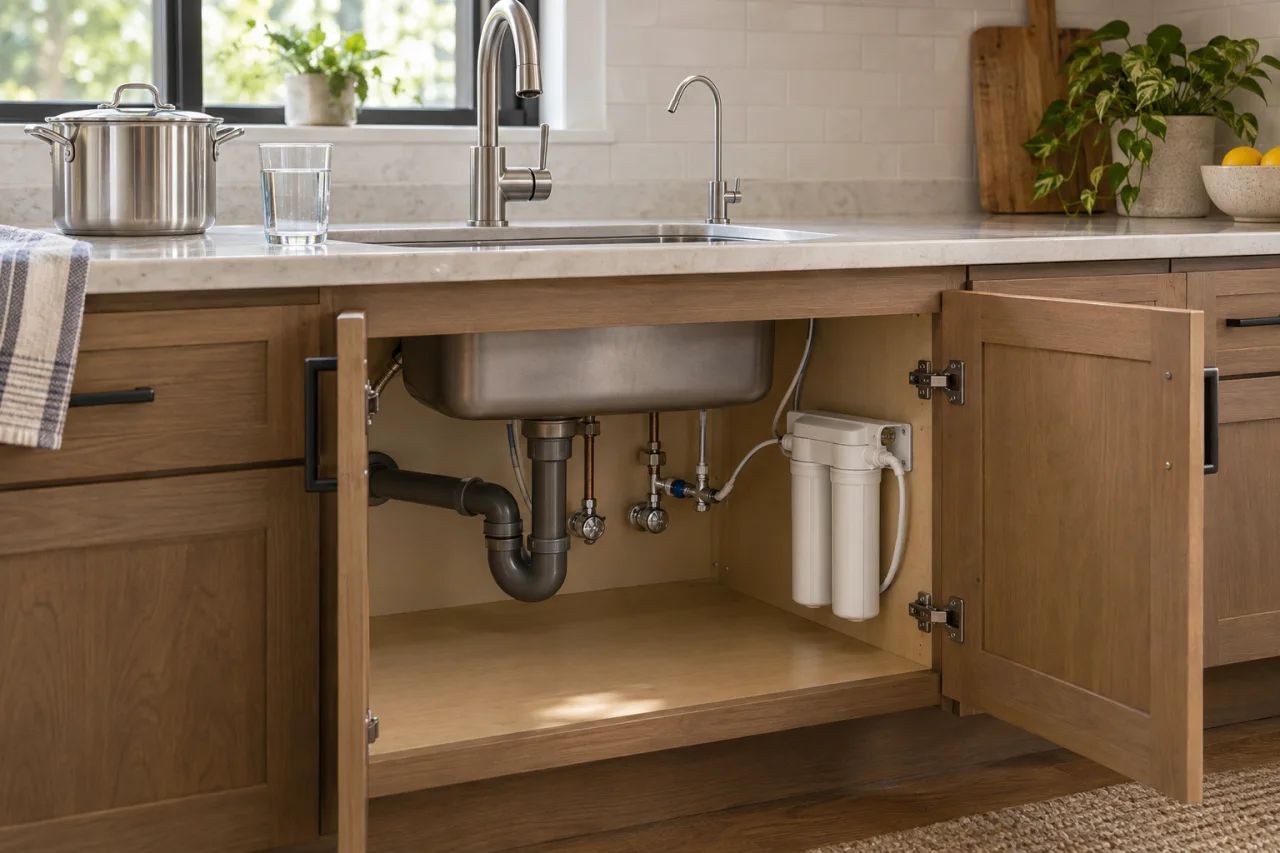
Whole-House or Under-Sink Filtration: Where Should Treatment Happen?
Whole-house treatment is not automatically the better choice. Compare where water is used, what needs reducing and how much maintenance each option requires.
What Drives the Cost of Whole-House Water Filtration?
Two whole-house filtration proposals may solve different problems. Compare water results, treatment flow, installation requirements and replacement expenses before choosing.