
Practical guides · cost
The Ongoing Costs of a Reverse Osmosis Drinking Water System
The purchase price is only part of an RO budget. Use a practical worksheet to compare replacement parts, reject water, electricity, maintenance and installation adaptations.
What you’ll learn
- Budget separately for routine cartridges, membrane replacement, water, applicable electricity and professional service.
- Use current prices for the exact model; replacement schedules are planning assumptions, not lifespan guarantees.
- Check whether water-use figures include flushing and reflect the proposed tank configuration.
- Compare systems against the same treatment goal, household demand and ownership period.
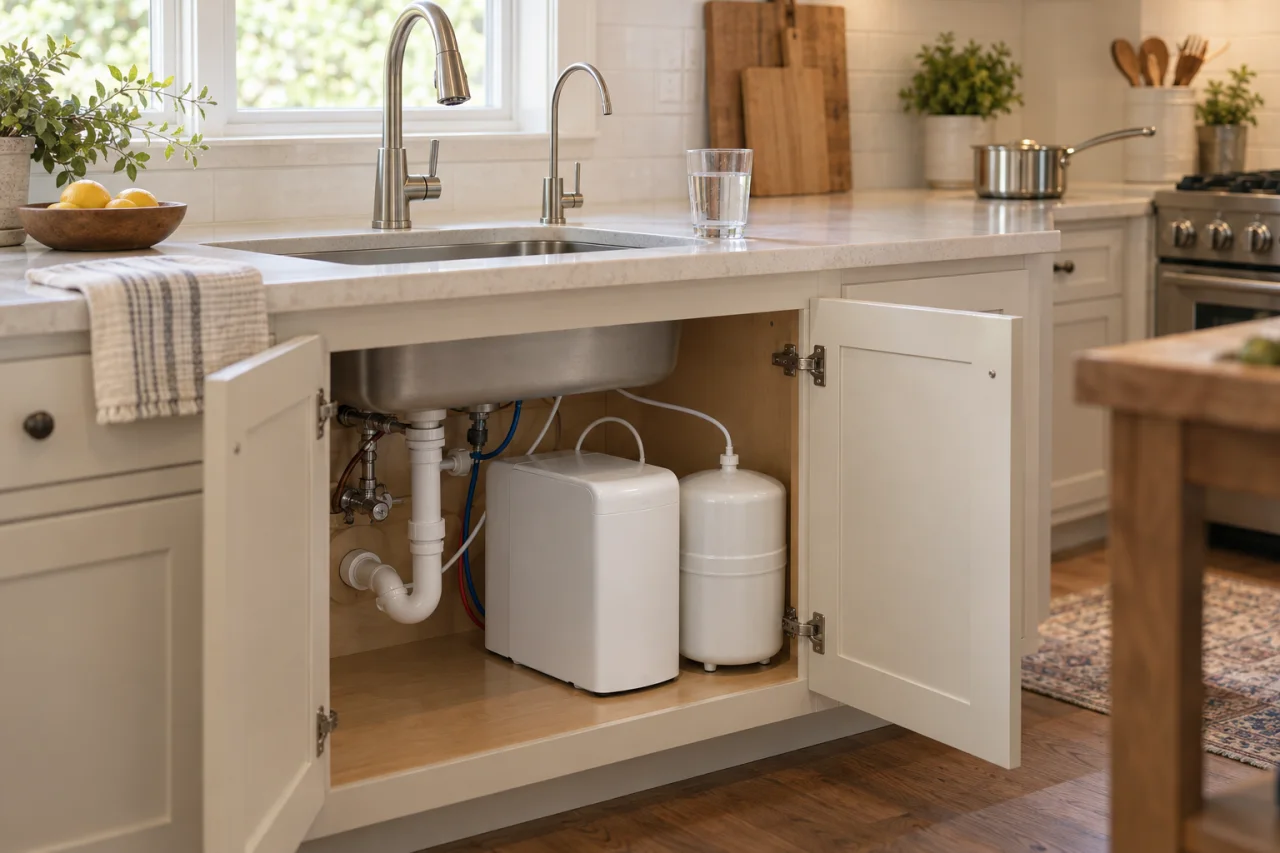
A reverse osmosis system’s initial invoice does not tell you what it will cost to own. Beyond installation, plan for replacement cartridges, the membrane, water sent to the drain, electricity where required and any professional maintenance. For Moore County households comparing Drinking Water Systems, the useful question is not simply “What does a filter change cost?” It is “What will this particular system need, with our water and our daily use?” This guide helps you build that budget without relying on generic prices or guaranteed replacement intervals.
Start with the treatment goal and daily demand
Before comparing ownership costs, identify what you want treatment to accomplish. Improving chlorine taste is a different goal from reducing a particular dissolved contaminant. Review your utility’s water quality report or appropriate well-water results, then check the exact model’s certified reduction claims.
RO is not automatically the lowest-cost answer to every concern. A suitable filter may meet some treatment goals without generating reject water. Our guide can help you compare pitcher, refrigerator filter and reverse osmosis claims before committing to equipment.
Also estimate drinking and cooking demand, including coffee, refillable bottles and any proposed refrigerator connection. Compare systems serving the same uses; otherwise, their operating budgets will not be meaningfully comparable.
Separate routine cartridges from membrane replacement
Keep three replacement categories separate: pre-filters, post-filters and the RO membrane. Obtain current part prices and ask whether cartridges are sold individually or as a set. Confirm compatibility and any manufacturer requirements before substituting a less expensive cartridge.
For the InterFlo® QuadPro SST, the owner’s manual gives general replacement schedules of 12 months for the pre-composite and post-composite filters and 48 months for the membrane. It also says schedules may vary with untreated water quality, pretreatment and volume used. These are planning intervals, not guaranteed service lives.
Ask for both the routine filter-change total and the larger total when the membrane is also due. Include required flushing and any model-specific cleaning or sanitization in the discussion. A parts-only comparison can conceal a meaningful difference in service scope.
Build an ownership worksheet, not just a filter budget
Use the worksheet to request comparable quotes, not to predict a universal annual price. Enter current local charges and the exact proposed equipment. Mark items already included in a service package so they are not counted twice.
For an annual planning allowance, divide a replacement item’s installed cost by its expected interval in years. Keep that allowance separate from actual cash spending: the membrane bill arrives in the replacement year, not in equal annual installments.
For a multi-year comparison, add the initial installed price, recurring expenses over the chosen period and separately identified adaptations. Apply the same ownership period and household demand to every option.
RO ownership worksheet: obtain model-specific inputs and distinguish one-time work from recurring expenses.
| Budget item | Information to obtain | How to record it |
|---|---|---|
| Pre-filters and post-filters | Exact parts, set price and replacement schedule | Price per change multiplied by changes per year; separate labor if excluded |
| RO membrane | Compatible membrane price and condition-dependent interval | Installed replacement cost divided by planning interval in years |
| Water and wastewater | Treated-water demand, reject ratio, flushing and applicable utility rates | Estimate total feed volume; apply only relevant usage-based charges |
| Electricity, if required | Operating and standby consumption for the proposed equipment | Annual kilowatt-hours multiplied by your electricity rate |
| Professional service and testing | Visit scope, labor, travel, cleaning and test charges | Count scheduled expenses without duplicating bundled parts or labor |
| Installation adaptations | Faucet opening, drain arrangement, electrical supply and extra connections | Record separately as one-time costs unless later work is anticipated |
| Required upstream treatment | Equipment needed to meet the RO model’s feed-water requirements | Include attributable upkeep; identify existing household costs separately |
Count reject water without confusing the ratio
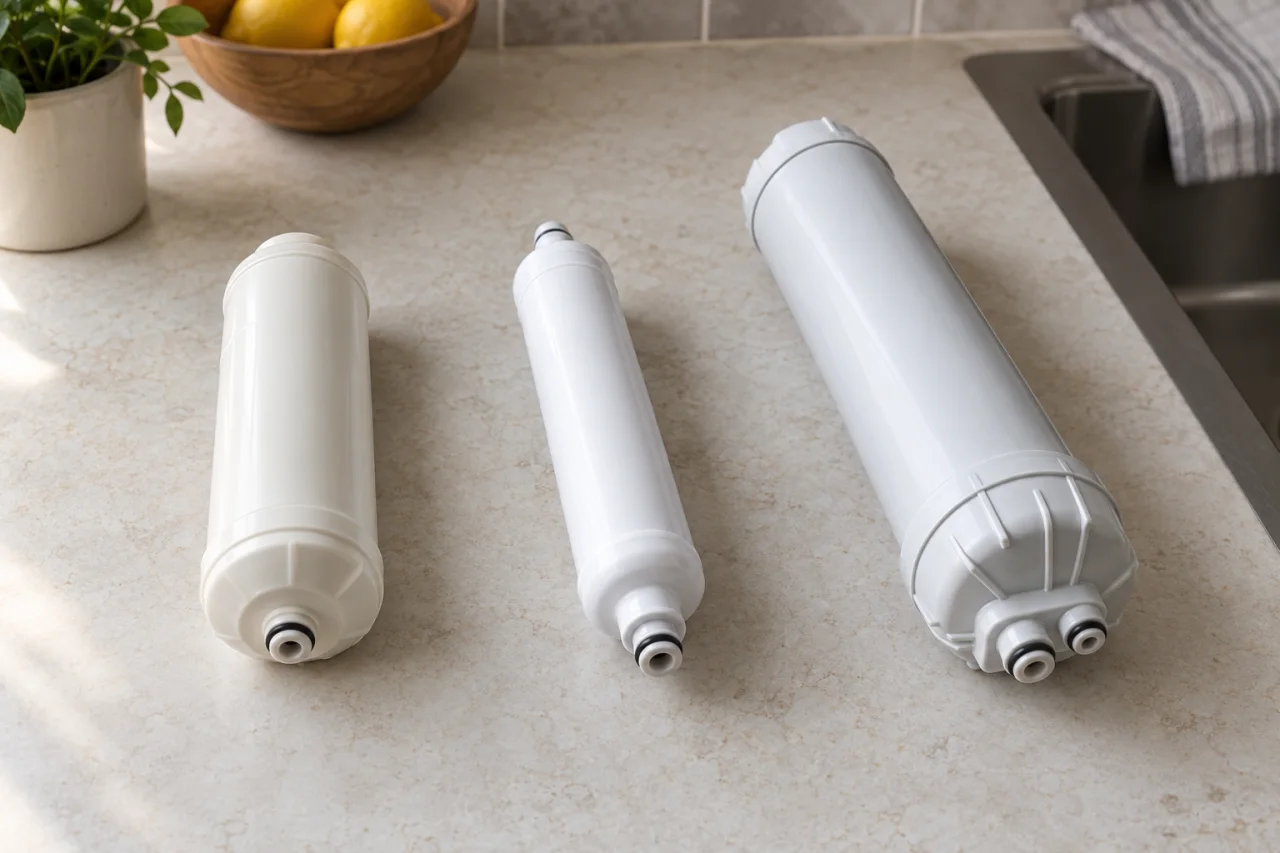
RO divides incoming water into treated water and a reject stream sent to the drain. For a planning calculation, multiply annual treated-water demand by the documented reject-to-treated ratio to estimate reject volume. Add treated volume to estimate total feed water, then account for flushing not already captured by the rating.
Use your own provider’s billing units and usage-based rates. Ask how wastewater charges are calculated rather than assuming they apply only to reject water. Do not allocate an entire fixed monthly utility charge to RO if owning the system does not change it.
Check the ratio’s direction: three parts treated to one part reject is very different from three parts reject to one part treated. WaterSense-labeled RO systems must demonstrate no more than 2.3 gallons of reject water per gallon treated, but that benchmark does not establish the performance of an unlabeled model.
Read production ratings in the context of your water
Rated production and recovery are measured under specified test conditions. They are comparison tools, not promises about output at your kitchen faucet. Recovery measured with a storage tank bypassed also does not describe the effects of tank backpressure during ordinary operation.
Feed pressure, temperature and dissolved-solids concentration affect production. Colder water can slow output, while higher dissolved-solids levels can require more processing time. Daily use patterns also matter when evaluating capacity and flushing.
Water chemistry deserves attention beyond a single TDS number. Ask whether hardness, sediment or other feed-water conditions require pretreatment to meet the model’s limits. Water Testing can help establish relevant conditions. Do not assume a larger advertised gallons-per-day number will correct unsuitable feed water or deliver proportionately better efficiency.
Allow for electricity and installation adaptations
Check electrical requirements for the actual model rather than assuming all RO systems work alike. The InterFlo® QuadPro SST requires a consistently powered outlet. For budgeting, request typical operating and standby consumption; voltage alone does not tell you annual energy use. Avoid multiplying maximum wattage by every hour of the year unless continuous full-load operation is actually expected.
The installation quote should also address the faucet opening, suitable drain and air-gap arrangement, access for cartridge changes and any electrical work. Refrigerator or secondary-faucet connections deserve separate scope confirmation.
Ask what is included now and what would trigger an additional charge. Keeping adaptations separate makes it easier to distinguish a more complex installation from a more expensive system.
Define what maintenance actually includes
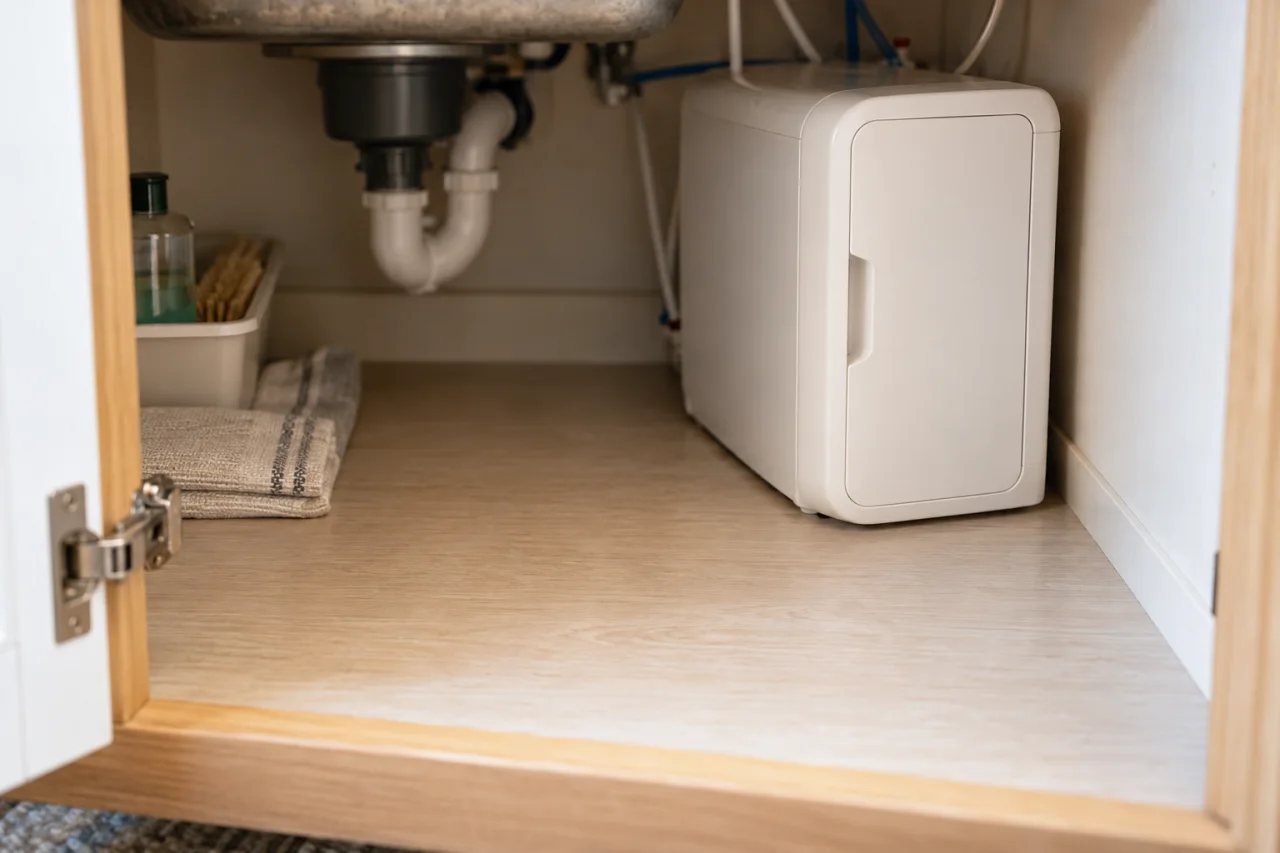
Decide whether you want owner-managed cartridge changes, professional maintenance or a combination. Compare equivalent tasks, not just visit prices. Ask whether a maintenance quote includes replacement parts, labor, cleaning or sanitization required by the manufacturer, and performance testing appropriate to your treatment goal.
Keep replacement dates and part details together. Investigate sustained slow flow, unexpected drain activity, leakage or a change in water quality rather than automatically ordering a membrane. Our reverse osmosis maintenance guide explains questions to raise when performance changes.
A TDS reading can help track general membrane performance, but it does not verify every contaminant-reduction claim. Ask which measurements are useful for your particular concern.
Ask for a proposal you can compare over time
The Water Knight installs reverse osmosis Drinking Water Systems for homes in Moore County. When discussing an option for your West End, Pinehurst or Southern Pines home, bring your water-source information, treatment goals and expected uses.
Ask for an itemized proposal that separates equipment, installation adaptations and ongoing care. The most useful budget is not necessarily the smallest first invoice: it is the one that makes replacement obligations and operating assumptions clear before you choose.
- Request the exact model, performance data sheet and relevant certified reduction claims.
- Obtain separate routine-filter and membrane-due service totals.
- Confirm the water-use ratio, its direction and whether flushing is included.
- Identify feed-water requirements, electrical needs and installation exclusions.
- Compare the same demand, service scope and ownership period.
Questions & answers
How much should I set aside each year?
Request current prices for the exact cartridges, membrane and service scope, then complete the worksheet. Add water, applicable wastewater charges and electricity where required. Keep a separate reserve for the membrane: an annualized allowance helps budgeting, but the full replacement bill comes due at once.
Does a tankless RO system always cost less to operate?
No. Tankless design alone does not establish total ownership cost. Compare documented water efficiency, replacement-part prices, electrical requirements, maintenance and suitability for your demand. A higher purchase price or lower reject-water ratio does not, by itself, establish the better overall value.
Can I budget on a four-year membrane life?
Only as a model-specific planning assumption, not a guarantee. The InterFlo® QuadPro SST manual gives a general 48-month membrane replacement schedule, with intervals affected by input water, pretreatment and use. Follow the applicable instructions and performance findings rather than assuming every membrane will reach that interval.
Does a private well make RO water free?
A private well may eliminate a utility water bill, but not every operating expense. Include relevant pumping electricity, upstream treatment upkeep, RO consumables and service. Discuss the reject-water discharge arrangement when planning the installation.
Can a low TDS reading replace contaminant testing?
No. Total dissolved solids is a general performance indicator, not a separate measurement of every contaminant. Match the system’s certified reduction claims to your treatment goal, and ask what testing is appropriate to verify that goal.
Sources & further reading
- EPA WaterSense: Point-of-Use Reverse Osmosis Systems
Explains point-of-use RO, reject water, the WaterSense maximum of 2.3 gallons of reject water per gallon treated, and why RO is not necessary for every treatment goal. ([epa.gov](https://www.epa.gov/watersense/point-use-reverse-osmosis-systems))
- EPA WaterSense Guide to Selecting Water Treatment Systems
Supports selecting treatment from water-quality information and specific certified claims; periodic filters, membranes and maintenance; and the distinction between general performance checks and targeted contaminant reduction. Informs the worksheet’s maintenance categories. ([epa.gov](https://www.epa.gov/system/files/documents/2025-01/ws-products-home-water-treatment-guide_v2_508.pdf))
- EPA WaterSense RO Specification Supporting Statement, November 2024
Explains efficiency versus recovery test metrics, storage-tank backpressure, water-volume relationships and inclusion of automatic flushing in WaterSense efficiency testing. Supports the water-budget calculation and rating limitations. ([epa.gov](https://www.epa.gov/system/files/documents/2024-11/ws-products-ro-systems-spec-supporting-statement_508.pdf))
- InterFlo QuadPro SST Installation Guide and Owner’s Manual
Provides model-specific general 12-month pre-filter and post-filter schedules and 48-month membrane schedule, with water-quality and use qualifications. Also documents outlet, installation-access and air-gap requirements, laboratory-rating limitations, and pressure, temperature and TDS effects. ([aosmith.water-right.com](https://aosmith.water-right.com/hubfs/QuadPro%20SST%20Manual-4.pdf?hsLang=en))
- Water Quality Association: Getting Smart With Reverse Osmosis Systems
Supports assessing pretreatment needs, feed-water TDS, pressure, temperature and daily use; timely filter replacement and sanitization; and configuration-dependent efficiency tradeoffs. Its process guidance is used as planning context, not as a claim about company procedures. ([wqa.org](https://wqa.org/wp-content/uploads/2024/06/GettingSmartSystems.pdf))
Prepared and automatically checked on . Conditions, costs and requirements can change. Ask about the details that apply to your situation.
Continue reading
Helpful next reads
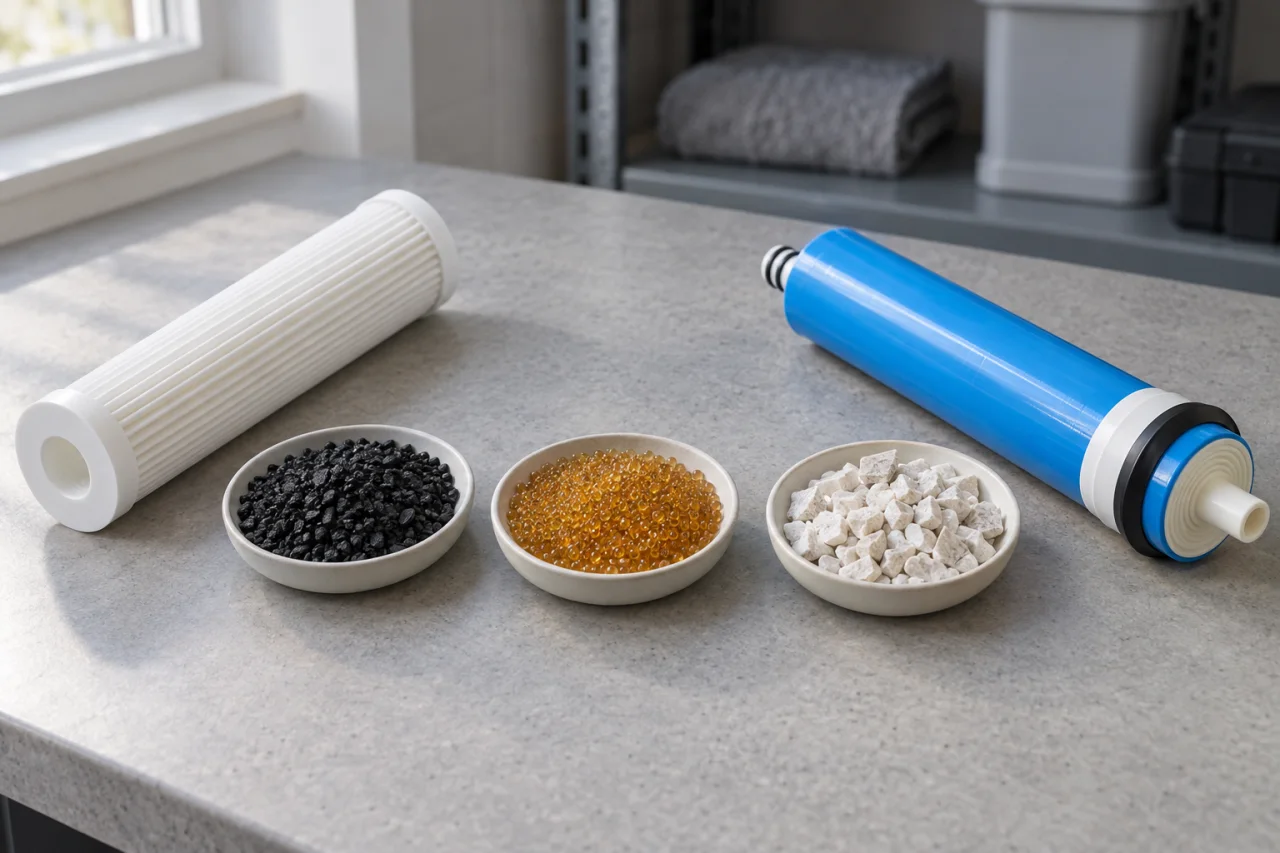
Carbon, Resin, Membranes and Mineral Media: A Water Treatment Options Guide
The material inside a treatment system determines its job. Compare carbon, resin, membranes and mineral media by water results, flow needs, upkeep and discharge.
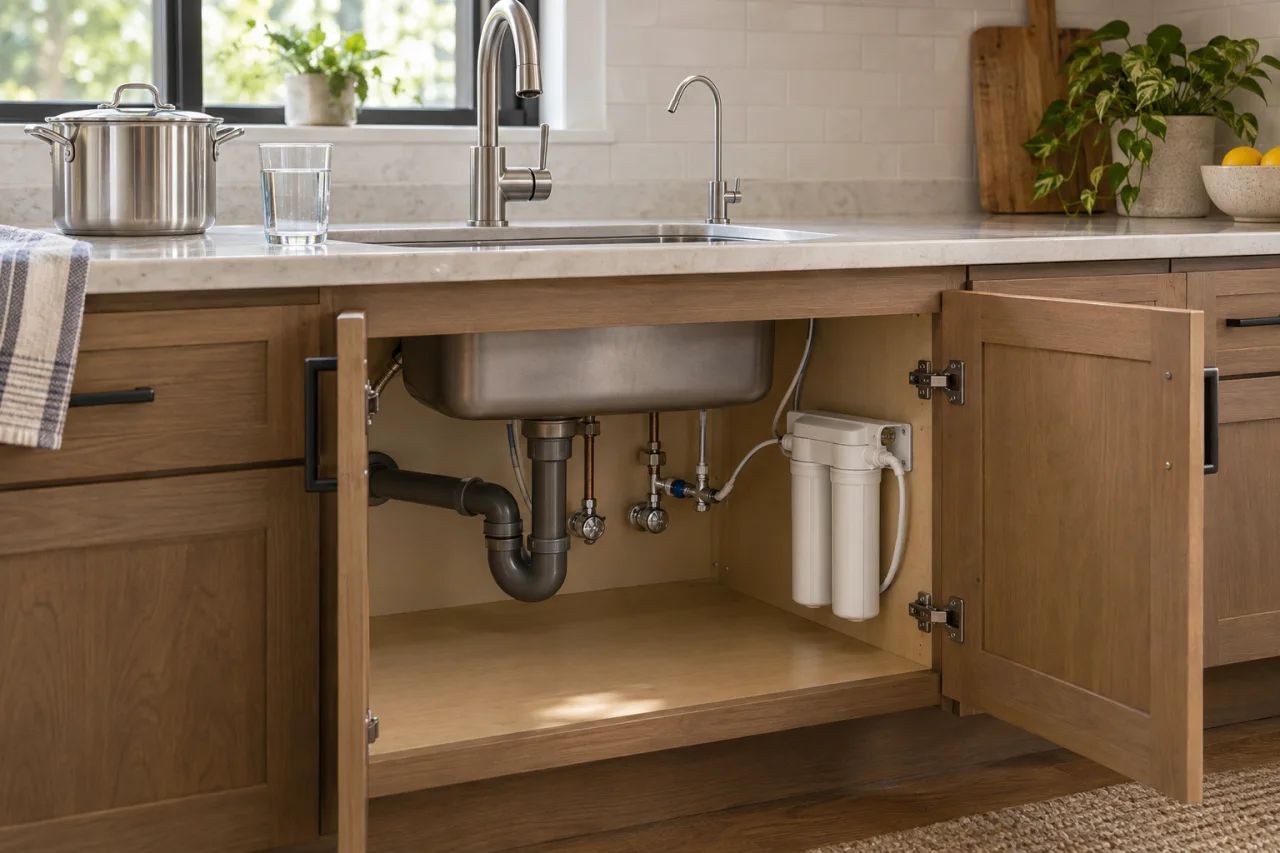
Whole-House or Under-Sink Filtration: Where Should Treatment Happen?
Whole-house treatment is not automatically the better choice. Compare where water is used, what needs reducing and how much maintenance each option requires.

PFAS and Your Drinking Water: What to Check Before Choosing a Filter
PFAS concerns call for specific evidence, not a bigger filter by default. Find relevant results, understand their limits and verify the exact treatment claim before buying.