
Practical guides · comparison
Whole-House or Under-Sink Filtration: Where Should Treatment Happen?
Whole-house treatment is not automatically the better choice. Compare where water is used, what needs reducing and how much maintenance each option requires.
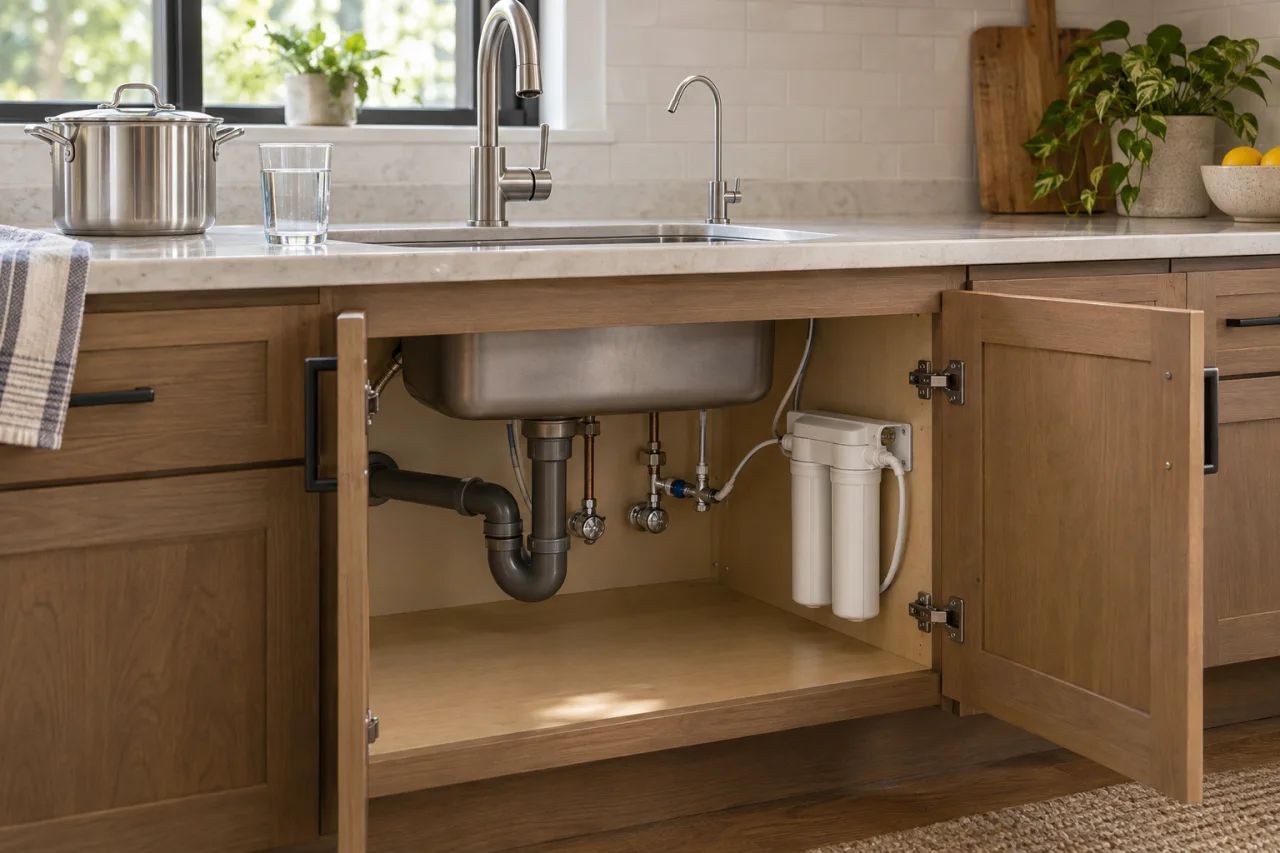
What you’ll learn
- Choose treatment location after identifying the water-quality concern and the uses that matter.
- A kitchen system can suit drinking-and-cooking priorities; whole-house treatment serves different needs.
- Complementary systems can make sense, but each stage should have a defined purpose.
- Compare certified claims, capacity, replacement requirements and water use—not equipment size alone.
The best place to treat water depends on the job. Whole-house, or point-of-entry, systems treat incoming water for distribution through the building. Under-sink, or point-of-use, systems target a selected tap. One may be enough; different concerns can justify both. Start with your water-quality evidence and intended uses rather than assuming broader treatment is better. (cdc.gov)
Start with the concern, not the equipment
Write down the problem before choosing a location: particles at several fixtures, mineral scale, unpleasant drinking-water taste or a laboratory finding. These are different treatment goals. Clear, pleasant-tasting water is not proof of safety, and an unpleasant odor does not by itself identify a health hazard. (cdc.gov)
For public water, begin with your supplier's consumer confidence report and consider testing that addresses concerns at your property. For a private well, use appropriate laboratory testing rather than a neighbor's results. North Carolina public health guidance places responsibility for well testing on the owner and recommends contacting a local health department or certified laboratory. Private Well Testing in Moore County offers a useful starting point. (nsf.org)
Decide which uses need treated water
Ask where exposure or inconvenience actually occurs. If the goal is treating water used for drinking and cooking, a kitchen point-of-use system may cover that need without treating every gallon entering the building. (cdc.gov)
Some concerns require a wider view. CDC identifies certain volatile organic chemicals as a reason to consider whole-home treatment, including water used for bathing and cleaning. A drinking-water faucet alone would not address those other uses. Seek contaminant-specific advice rather than assuming that every chemical requires whole-house treatment. (cdc.gov)
Make a short inventory: kitchen drinking tap, refrigerator, bathroom drinking taps and any other outlets used for beverages or food preparation. Ask which would receive treated water under the proposed layout. A dedicated kitchen faucet should not be mistaken for treatment at every outlet. (cdc.gov)
Compare the layouts—and the technology inside
Whole-house and under-sink describe location, not a universal level of protection. The following options serve different purposes; none should be selected without matching its performance to the concern. For a closer look at the materials inside these systems, see the water treatment options guide. (nsf.org)
Treatment layouts and technologies: where each fits, and what it leaves unresolved.
| Option | Best-fit situation | Benefits | Tradeoffs and limitations |
|---|---|---|---|
| Whole-house particulate filtration | Useful when incoming particles are the concern across multiple fixtures. | Treats water before distribution through the building. | Does not automatically address dissolved chemicals, hardness or germs; needs building-wide capacity. |
| Under-sink carbon filtration | Useful for kitchen taste-and-odor goals or specific certified reduction claims. | Targets a selected drinking-water outlet without an RO reject-water stream. | Does not provide whole-building treatment; ordinary carbon filtration is not a nitrate or hardness solution. |
| Under-sink reverse osmosis | Useful when drinking-water goals match the model's certified reduction claims. | Membrane treatment can address selected dissolved substances. | Produces reject water and requires filter and membrane maintenance; does not treat other taps. |
| Whole-house treatment plus under-sink treatment | Useful when building-wide concerns and drinking-water goals differ. | Allows separate technologies to perform complementary jobs. | Adds equipment and maintenance; each stage needs a defined purpose. |
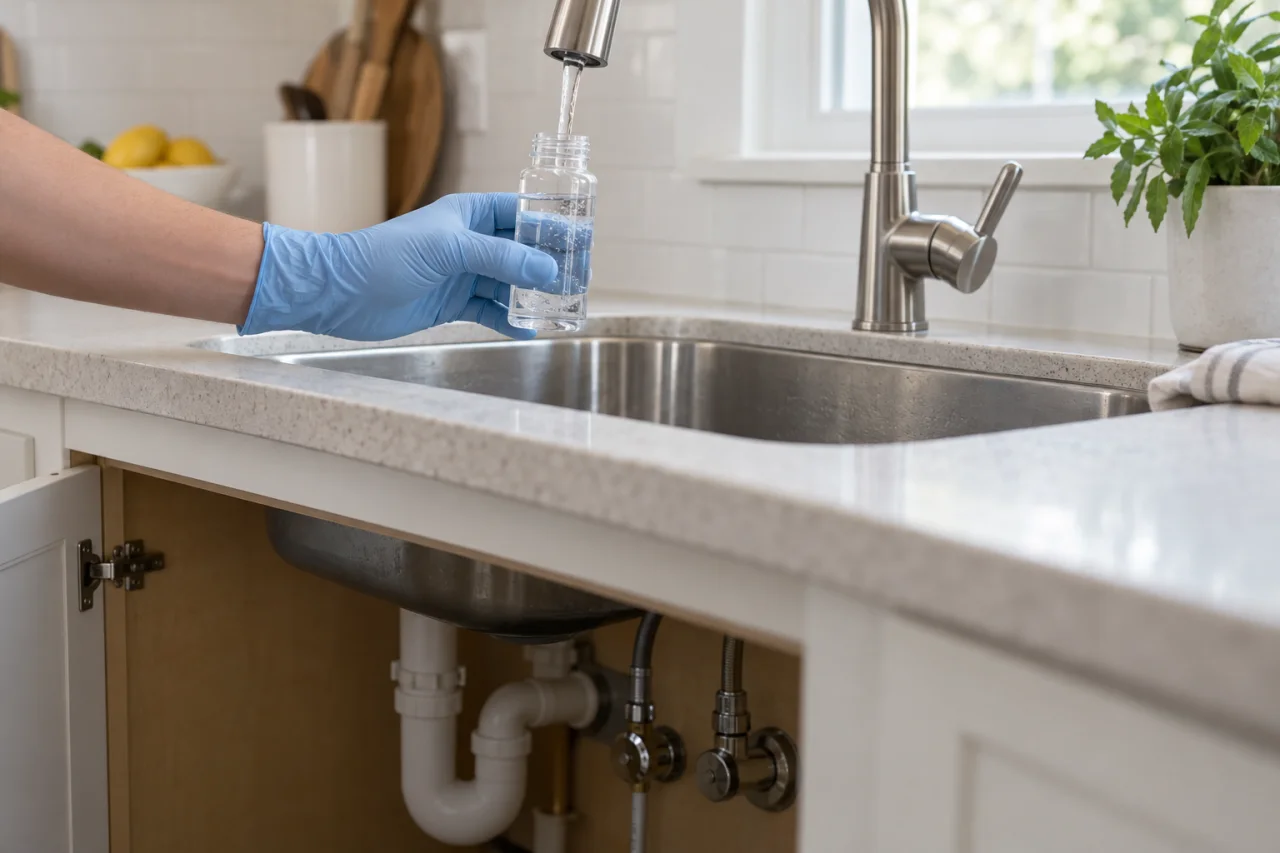
Use both only when each has a distinct job
Two systems can make sense when they solve two documented problems. For example, hardness-related scale throughout a home and a separate drinking-water concern may call for different technologies. A softener removes hardness minerals; reverse osmosis can reduce selected dissolved chemicals at a drinking tap. Neither label promises removal of every contaminant. (cdc.gov)
Likewise, a microbial finding calls for a treatment decision specific to germs—not an assumption that any filter provides disinfection. CDC distinguishes UV treatment from chemical removal and notes that multiple treatment types may be needed. (cdc.gov)
Ask what each proposed stage contributes. If two pieces of equipment appear to do the same job, request an explanation of why both are necessary, including any manufacturer-required pretreatment. The goal is a coherent treatment plan, not simply more equipment. (cdc.gov)
Match capacity to daily routines
Whole-house equipment treats a much larger water volume than a dedicated drinking tap. EPA advises considering where treated water is needed and how much is required, while avoiding unnecessary oversizing because it increases purchase, operation and maintenance costs. (epa.gov)
Use the questions below to make the proposal specific to your household. Describe actual routines—such as showers running while laundry starts, or filling cooking pots while preparing drinks—rather than choosing equipment by bedroom count alone. Ask the installer to explain the proposed capacity and installation requirements.
- Which fixtures and branches will receive treated water?
- What flow and pressure does the proposed equipment require?
- How will simultaneous household use affect system selection?
- For a drinking-water system, how much treated water is needed during busy periods?
- Is there enough accessible space for equipment and future servicing?
Compare the full commitment, not just installation
Compare installation and ownership costs together. EPA identifies technology, installation location and the contaminants being treated as price drivers. Ask whether the proposal includes plumbing alterations, required pretreatment, startup supplies and any necessary drainage work. Request a separate explanation of recurring cartridges, membranes and service requirements. (epa.gov)
RO adds another consideration: reject water. EPA cautions against choosing RO automatically when simpler filtration would meet the goal. WaterSense-labeled RO systems meet independent efficiency and performance criteria, but you still need to verify the specific contaminant claims. (epa.gov)
When comparing Drinking Water Systems, ask for the replacement schedule and consumable requirements alongside the equipment price. The ongoing costs of a reverse osmosis drinking water system deserve attention before purchase, not after installation.

Choose maintenance you can sustain
A slow tap can signal a clogged filter, but normal flow does not prove that the media still captures its target contaminants. NSF explains that a filter's adsorption capacity can become exhausted without the obvious restriction caused by trapped particles. Follow the manufacturer's service interval and use the specified replacement cartridge; similar-looking cartridges are not necessarily interchangeable. (nsf.org)
Whole-house chlorine removal also has a tradeoff. CDC warns that removing disinfectant at the building entrance can allow more germs to grow in plumbing. That does not make every such installation inappropriate, but it belongs in the maintenance discussion. (cdc.gov)
Before committing, decide who will track replacements, obtain compatible parts and arrange servicing. A maintenance plan should be practical for the person responsible—not merely possible on paper.
Bring a focused set of questions to the assessment
Do not stop at a certification logo or standard number. NSF advises checking both the applicable standard and the specific contaminant-reduction claim. Certification for one claim is not evidence that a system addresses every water-quality concern. (nsf.org)
The Water Knight offers Water Filtration and Drinking Water Systems for homes and businesses in West End and Moore County. Its supplied planning steps are straightforward: discuss what you have observed, arrange an appropriate assessment and review the proposed work before proceeding. Bring your report or test results, your outlet priorities and your maintenance questions to that discussion. The useful decision is where treatment has a clear purpose—not which system sounds most comprehensive.
- Name the concern and the evidence supporting treatment.
- Identify the outlets that need treatment.
- Verify the exact model's certified reduction claims.
- Compare installation scope, consumables and water use.
- Agree on maintenance responsibilities before proceeding.
Questions & answers
Does a whole-house filter make an under-sink system unnecessary?
Only if the whole-house system addresses every treatment goal relevant to your drinking water. Location alone does not establish performance. Compare the specific contaminant-reduction claims before deciding whether another treatment stage adds value. (nsf.org)
Does under-sink filtration always mean reverse osmosis?
No. Under-sink describes an installation location. Plumbed-in filters and reverse osmosis systems can both serve a kitchen tap, but their treatment capabilities differ. Select the technology and certified claims that match your water-quality concern. (nsf.org)
Will ordinary filtration solve hard-water scale?
Do not assume so. Hardness comes primarily from calcium and magnesium. Water softeners remove those minerals; a sediment or taste-and-odor filter is not automatically a substitute for softening. (cdc.gov)
Can I wait for bad taste before replacing a cartridge?
No. A filter can exhaust its ability to capture contaminants without an obvious change in flow or taste. Follow the manufacturer's replacement instructions and use the correct cartridge rather than relying on sensory clues. (nsf.org)
Sources & further reading
- CDC: About Choosing Home Water Filters
Choosing treatment by concern and use; taste and smell limitations; point-of-use versus whole-home treatment; disinfectant-removal and maintenance cautions.
- CDC: About Home Water Treatment Systems
Treatment technologies, softening, UV limitations and the potential need for complementary systems.
- EPA: WaterSense Guide to Selecting Water Treatment Systems
Comparison of filtration and RO; matching treatment volume to need; avoiding oversizing; installation and ownership cost factors.
- EPA: Point-of-Use Reverse Osmosis Systems
RO operation, reject water, WaterSense efficiency and performance criteria, and avoiding unnecessary RO treatment.
- NSF: Home Water Treatment
Treatment placement, whole-house particulate filtration, identifying water concerns and checking specific certified contaminant-reduction claims.
- NSF: Changing Water Filters
Clogging versus exhausted adsorption capacity, manufacturer replacement intervals and correct cartridge selection.
- NCDHHS: Is Your Well Water Safe? A Guide for NC Families
North Carolina private-well owner testing responsibilities and use of local health departments or certified laboratories.
Prepared and automatically checked on . Conditions, costs and requirements can change. Ask about the details that apply to your situation.
Continue reading
Helpful next reads
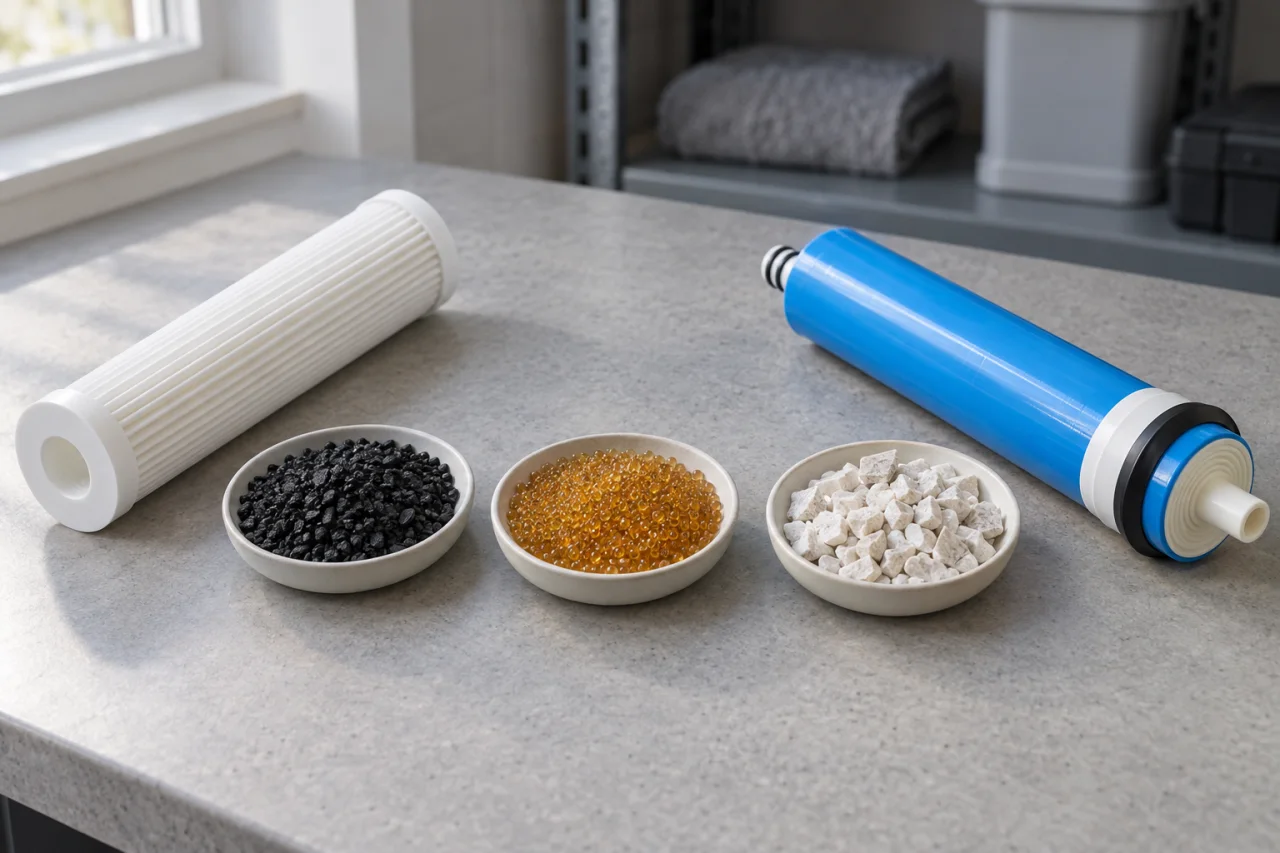
Carbon, Resin, Membranes and Mineral Media: A Water Treatment Options Guide
The material inside a treatment system determines its job. Compare carbon, resin, membranes and mineral media by water results, flow needs, upkeep and discharge.
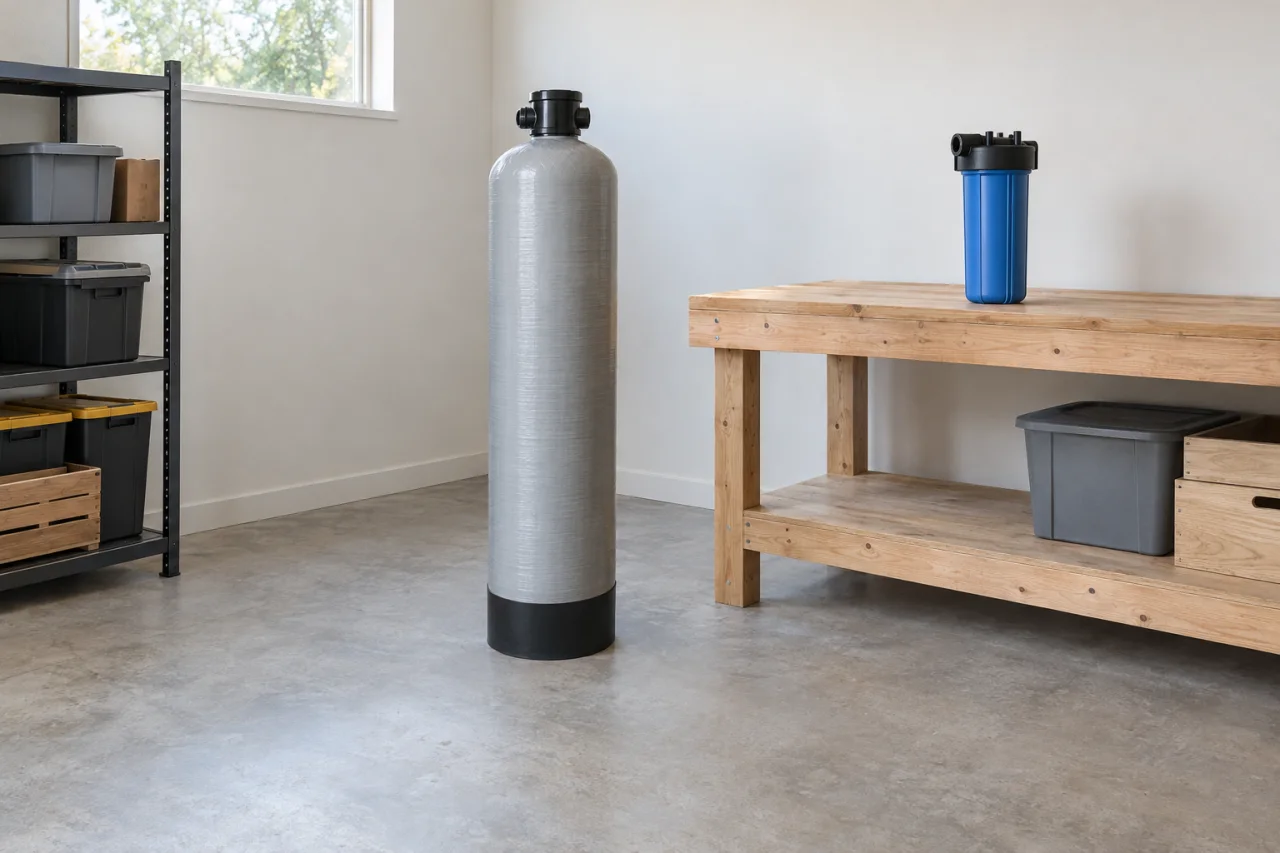
What Drives the Cost of Whole-House Water Filtration?
Two whole-house filtration proposals may solve different problems. Compare water results, treatment flow, installation requirements and replacement expenses before choosing.
PFAS and Your Drinking Water: What to Check Before Choosing a Filter
PFAS concerns call for specific evidence, not a bigger filter by default. Find relevant results, understand their limits and verify the exact treatment claim before buying.