
Practical guides · maintenance
Water Softener Care: Salt, Regeneration and Signs to Investigate
A practical owner checklist for approved salt, brine-tank changes, display alerts and hardness testing—with clear boundaries between routine checks and qualified service.
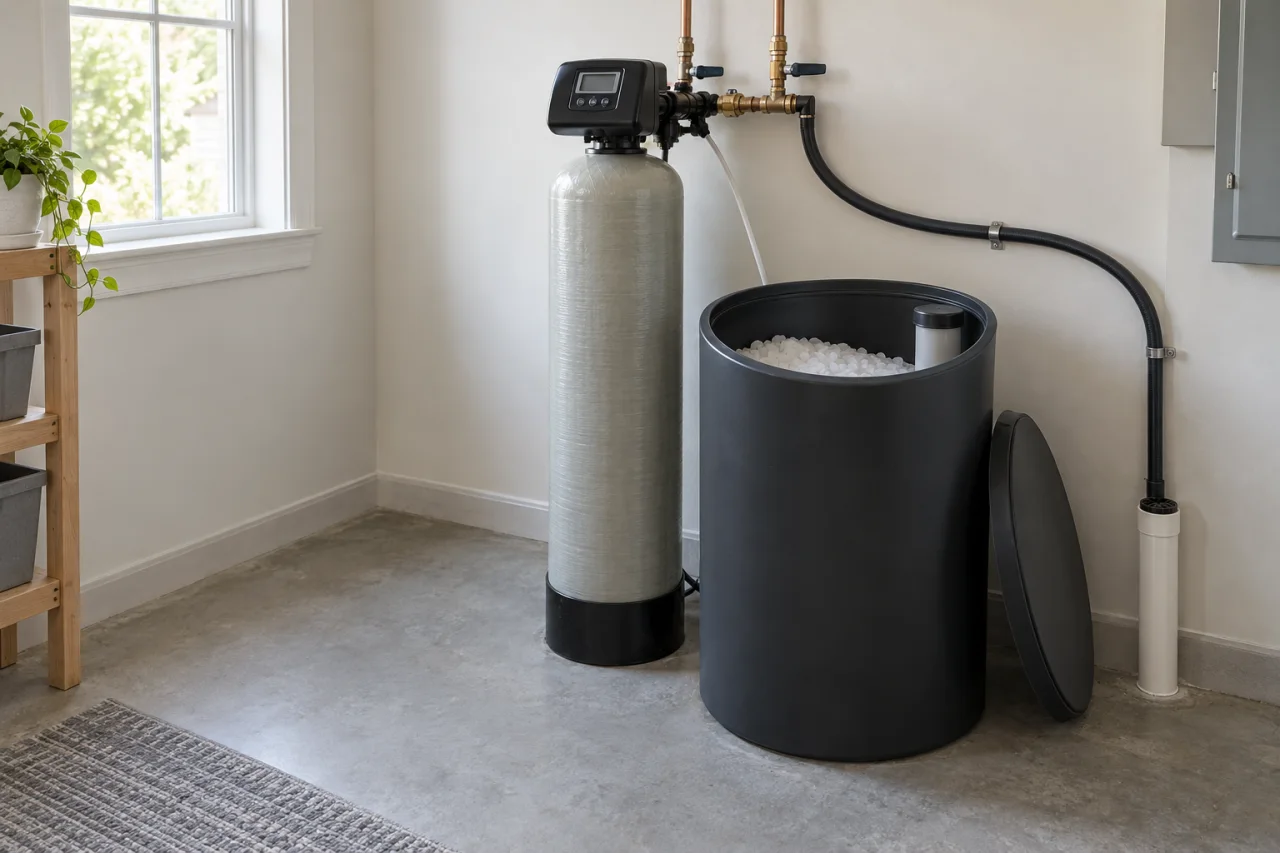
What you’ll learn
- Use the salt and refill guidance approved for your exact softener configuration.
- An unchanged salt level, unusual brine-water level or display alert is a clue to investigate—not a reason to change settings blindly.
- Regeneration depends on hardness, capacity and demand; extra cycles are not a universal solution.
- Track treated-water hardness separately from broader drinking-water safety concerns.
- Keep owner checks observational and leave persistent faults, internal repairs and treatment adjustments to qualified service.
Between service visits, the most useful water softener care is straightforward: monitor the salt supply, notice changes in the brine tank, read the display and verify performance when the water seems different. The goal is not to become a repair technician. It is to recognize a meaningful change early and bring useful observations to the next service conversation. Start with your model's instructions, because salt requirements, refill timing and regeneration controls are not identical across systems.
1. Establish your softener's normal pattern
Start with the manual for your exact model, not simply the brand. The Water Knight offers Impression Plus Series® water softeners, but a household's installed equipment, controller and configuration determine which instructions apply.
Create a small maintenance record with the model, approved salt, normal display appearance and any baseline hardness result. Record observations without changing settings just to see what happens. A dated photo of the tank's salt level can make a later comparison easier.
The aim is to establish what is normal for your equipment. A quiet week with little salt consumption means something different from an unchanged salt level during weeks of heavy household use.
- Keep the correct owner's manual and model information together.
- Record salt additions and changes in household water use.
- Save display messages before clearing or changing anything.
- Keep comparable treated-water hardness results when available.
2. Refill with approved salt, not extra additives
Choose the salt specified for your equipment. Water-Right recommends solar salt for Impression and Impression Plus units; its applicable manuals provide additional restrictions for particular configurations. Do not assume that blocks, pellets and coarse crystals are interchangeable simply because all are sold for water treatment.
Follow the model's minimum fill guidance and avoid packing the tank to the lid. For the Impression/Impression Plus models covered by the referenced manual, the specified minimum is one-third full. That is model guidance, not a universal rule for every softener.
Do not add resin cleaner or an iron-removing salt without approval for the installed media. A product marketed as helpful maintenance can be unsuitable for a particular system. Save the salt packaging information if a performance change follows a product switch.
3. Notice what changes inside the brine tank
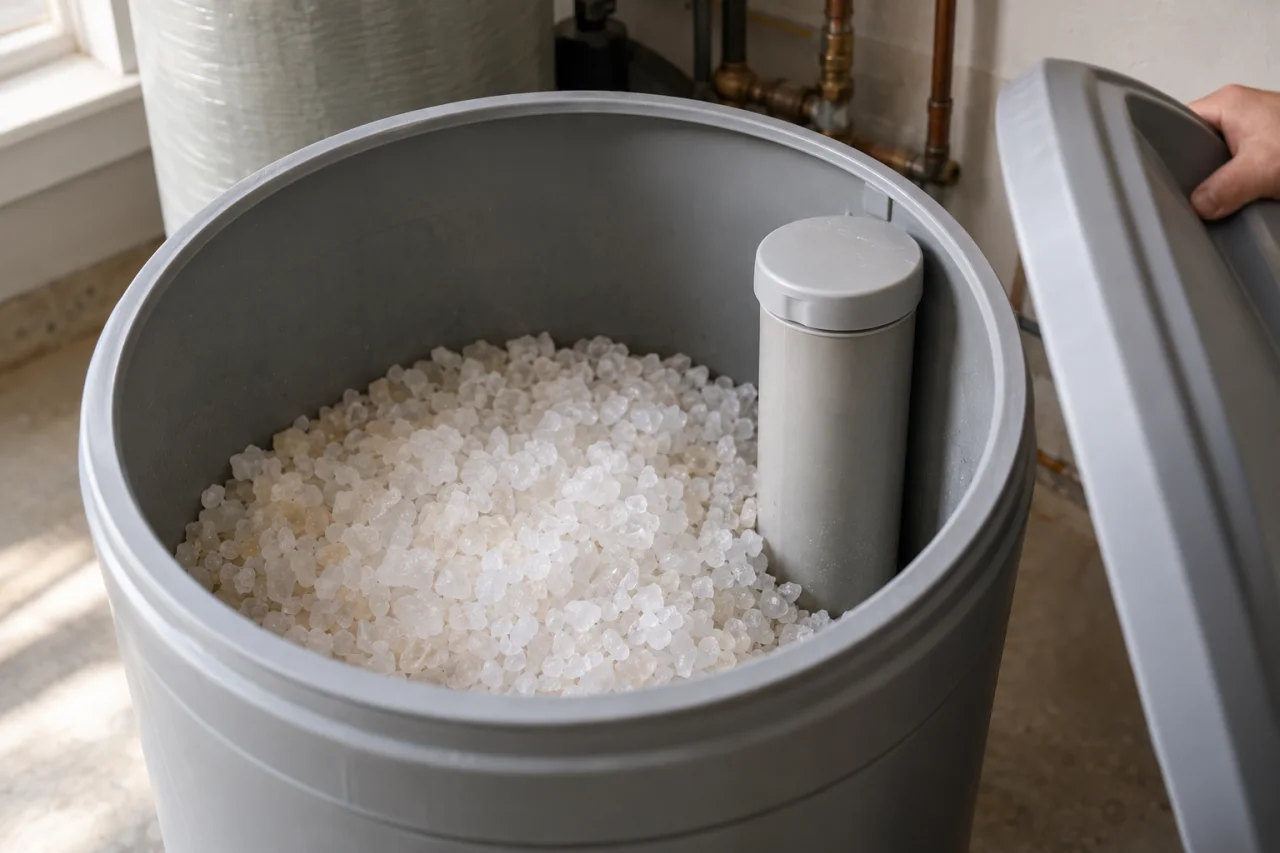
Look for a trend, not just whether salt is present. A salt bridge is a hardened layer suspended above the water, leaving a gap that prevents normal brine formation. The tank can appear supplied even while the salt below that crust is not dissolving properly.
If the level stops dropping, compare household use and regeneration activity before concluding there is a bridge. Low use also reduces consumption. Follow only your model's approved bridge-checking method; avoid forceful stabbing or striking the tank. Ask for help if the instructions are unclear.
Water level also needs context. Some configurations retain little water between cycles. A level that rises unusually, approaches overflow or repeatedly differs from the established pattern needs investigation rather than another bag of salt.
Brine-tank observations are clues, not diagnoses. Normal water level and refill timing depend on the installed model.
| Observation | Possible meaning | Reasonable next step |
|---|---|---|
| Salt gradually settles | Normal consumption may be occurring | Refill according to the manual; this alone does not verify softening |
| Salt remains unchanged during normal use | Low demand, bridging or a brine-system problem | Review use and display activity; seek help if the cause is unclear |
| Little visible water between cycles | Potentially normal with dry salt storage | Confirm the configuration before adding water |
| Unusually high water or overflow | Possible malfunction | Request service rather than adjusting internal components |
4. Leave regeneration settings tied to actual demand
Regeneration restores the resin's ability to exchange hardness minerals. Its frequency depends on incoming hardness, water consumption, usable capacity and the control design. Your neighbor's schedule is not necessarily suitable for your home.
Demand-initiated controls respond to treated-water use or hardness rather than relying only on elapsed time. Some systems also have a day override that limits the interval between cycles. More frequent regeneration is not automatically better: unnecessary cycles consume salt and water, while inadequate regeneration can allow hardness through.
On the referenced certified Impression Plus models, the hardness setting is based on water analysis and is intended to be set by an authorized dealer. It changes regeneration calculations; it is not a dial that directly selects how soft the outlet water feels. For more context, read how demand and hardness affect softener sizing.
5. Record alerts before resetting controls
Distinguish an ordinary operating screen, a flashing clock and an error message. After a power interruption, check the clock and follow the owner's instructions for restoring the correct time. Do not assume a blank display means the resin tank needs replacement.
If an error appears, record its exact wording or number and contact the servicing professional. Repeatedly clearing it can hide the information needed to identify the fault. A low-salt alert, if fitted, should also be checked against the actual tank contents rather than simply silenced.
Note when an alert began, whether power was interrupted and whether water performance changed at the same time. Leave electrical diagnosis, control-valve disassembly and internal repairs to qualified service.
6. Verify performance with hardness testing
Returning soap scum or new scale can justify a hardness check, but appearance alone does not establish the cause. Existing deposits are not a measurement of today's treated water.
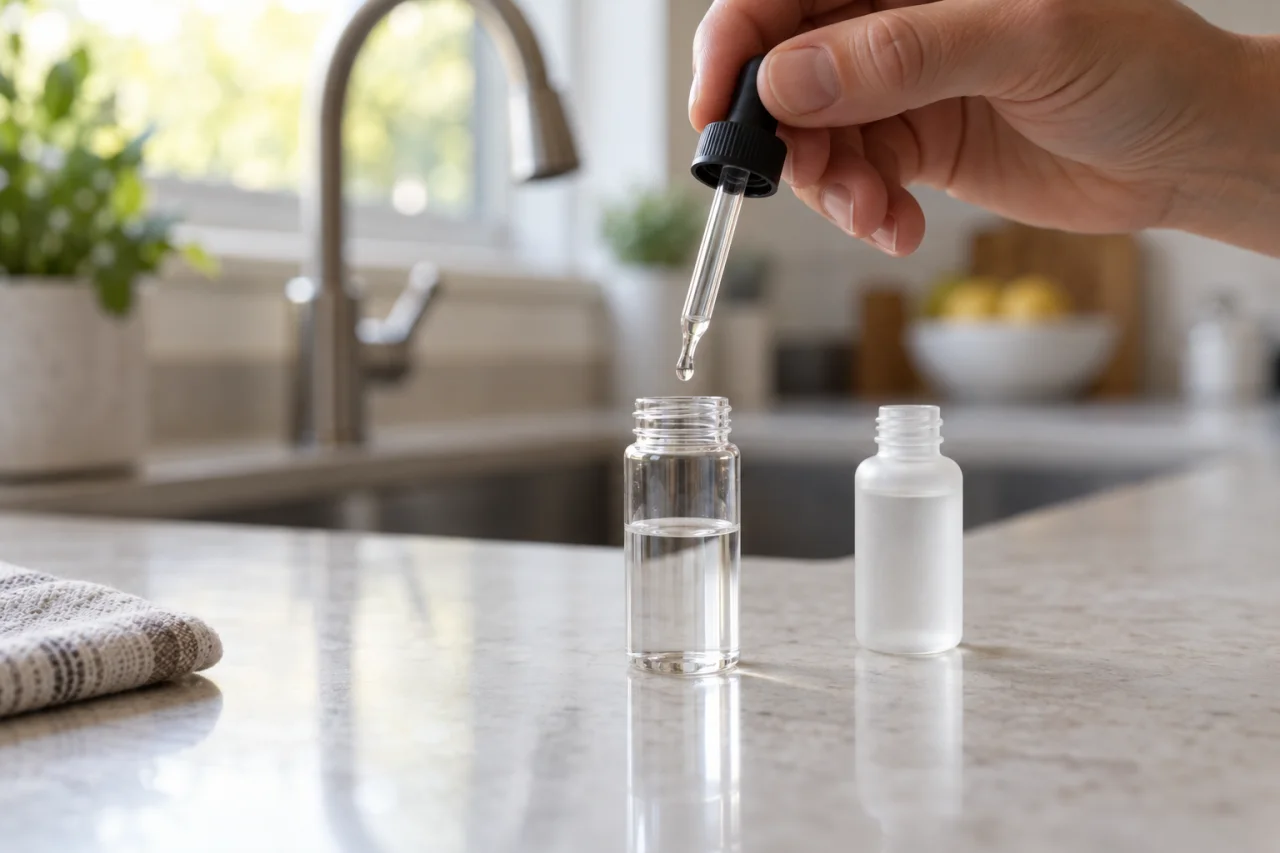
Ask which cold-water outlet is supplied through the softener, then use a suitable hardness test according to its instructions. For useful comparisons, record the sample location, units, date and whether the system had recently regenerated. Avoid comparing results from different outlets without knowing whether both receive treated water.
If hardness rises, Water Testing can help distinguish a treatment-performance issue from a change in incoming water. Do not treat new odor, discoloration or a contamination concern as merely a softener adjustment. A softener primarily addresses hardness; private well testing in Moore County involves separate water-quality questions.
7. Know when observation should become a service call
The dividing line is whether you are observing accessible parts or altering the system. Continuous drain flow outside an expected cycle, leakage or a tank approaching overflow deserves prompt attention, not repeated regeneration attempts.
Keep water away from electrical equipment. If a leak develops, use only a shutoff or bypass you can confidently identify from the correct instructions, and obtain help when unsure. Bypass supplies untreated water; it does not repair the fault.
Ask your servicing professional to demonstrate the normal operating position and the appropriate response to a leak before a problem occurs.
- Reasonable owner checks: observe salt and water levels, refill approved salt, read the display and look for visible leaks.
- Follow the manual: clock corrections, hardness sampling and any expressly permitted salt-bridge check.
- Arrange qualified service: persistent errors, rising brine water, continuous drain flow or hardness that remains elevated.
- Leave internal work to service: valve repairs, brine-line diagnosis, electrical testing and treatment-setting changes.
8. Make the next maintenance visit more useful
Periodic cleaning and professional maintenance still matter even when the display looks normal. General maintenance guidance recommends regular professional servicing, but cleaning intervals and methods should follow the installed model, salt choice and operating conditions. Do not substitute a general cleaning recipe for equipment-specific instructions.
Before a visit, gather your salt record, display messages, hardness results and any recent change in occupancy or water use. Ask whether the proposed work addresses a confirmed fault, routine cleaning or a settings review. Request an explanation of parts, labor and testing included before proceeding.
For homes and businesses in West End and Moore County, The Water Knight's Water Softener service provides a place to discuss observations and arrange an appropriate assessment. Water treatment visits are by arrangement.
Questions & answers
How often should I check the salt?
Use your model's instructions. As a general starting point, inspect it every four to six weeks, then adjust your reminder to actual consumption. Check sooner after unusually heavy water use. A reminder is more dependable than waiting for an alarm your model may not have.
Should I add water when the brine tank looks dry?
Not automatically. Some Impression/Impression Plus configurations use dry salt storage and refill before regeneration. Little visible water between cycles can be normal. Ask for model-specific guidance rather than adding water by guesswork.
Can I switch from sodium chloride to potassium chloride?
Confirm compatibility and programming with your servicing professional first. Water-Right supports potassium chloride in applicable equipment, but notes that capacity between regenerations can change. Do not assume the existing settings remain appropriate.
Does more salt in the tank make the water softer?
No. Maintaining the required salt supply lets the system make brine, but filling the tank higher is not a substitute for correct regeneration or a repair. If treated-water hardness rises despite adequate salt, investigate rather than repeatedly topping up.
Does a normal hardness result mean my well water is safe?
No. Hardness measures a different issue from microbial or chemical contamination. A functioning softener is not proof of drinking-water safety, and hardness testing does not replace appropriate private-well testing.
Sources & further reading
- Water-Right: Impression/Impression Plus Series Installation Instructions & Owner's Manual
Model-specific guidance on dry salt storage, minimum salt level, salt forms and cleaner restrictions; instructions to record errors and contact service; troubleshooting and bypass information.
- Water-Right: Certified Impression Plus Series Metered Water Softeners Owner's Manual
Certified Impression Plus programming guidance: hardness based on on-site analysis, dealer adjustment, effects on regeneration frequency, day override and clock correction after extended outages.
- Water-Right: Frequently Asked Questions
Solar-salt recommendation for Impression equipment, salt bridging, potassium chloride capacity considerations, cleaner cautions, periodic brine-tank cleaning and warnings against repeated error resets.
- EPA WaterSense: Guide to Selecting and Maintaining a Water-Efficient Water Softener, May 2026
Regeneration factors, demand-initiated control, periodic salt checks, bridging, bypass limitations, leaks and continuous drain flow; distinction between hardness treatment and treatment for other contaminants.
- EPA WaterSense: Home Maintenance
General recommendations for annual professional servicing, periodic salt checks and professional or manufacturer involvement in regeneration programming based on incoming hardness and flow.
Prepared and automatically checked on . Conditions, costs and requirements can change. Ask about the details that apply to your situation.
Continue reading
Helpful next reads
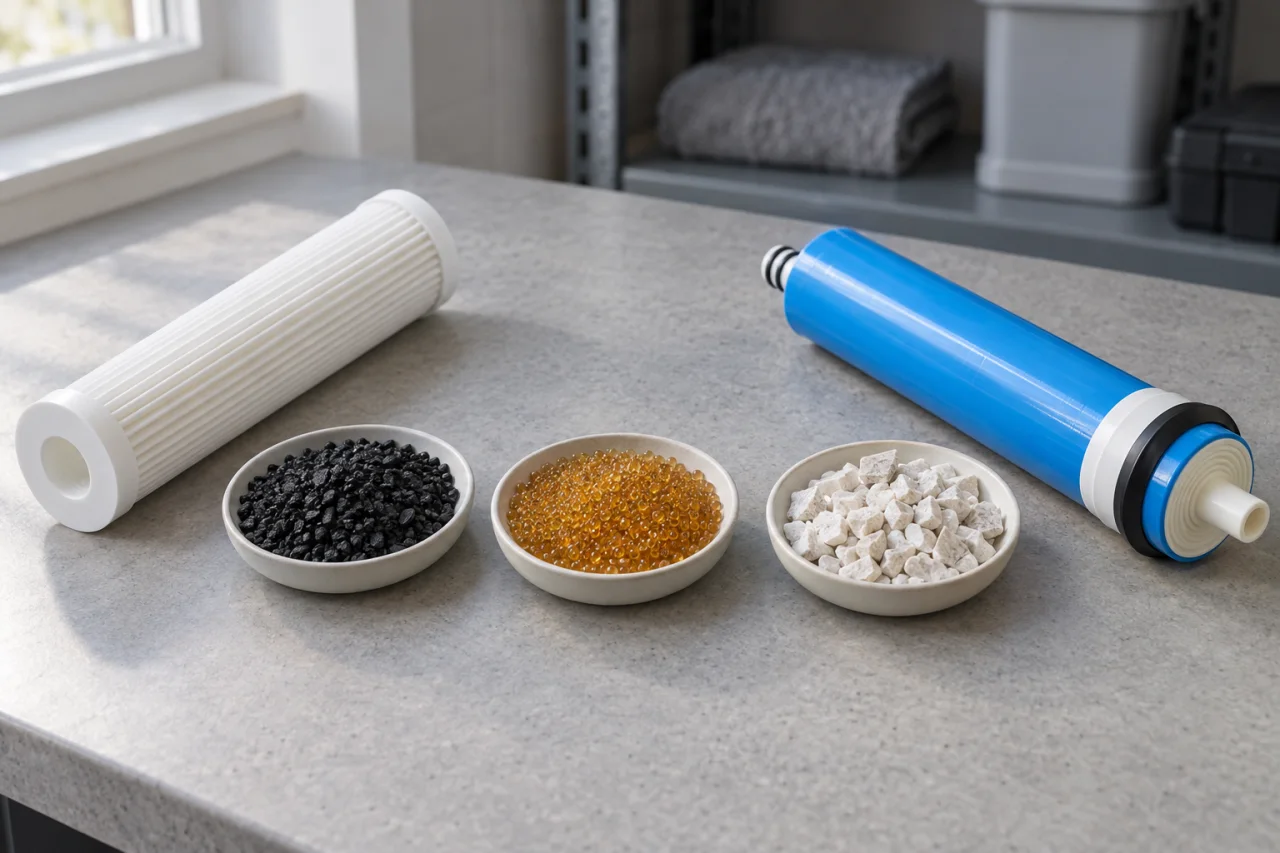
Carbon, Resin, Membranes and Mineral Media: A Water Treatment Options Guide
The material inside a treatment system determines its job. Compare carbon, resin, membranes and mineral media by water results, flow needs, upkeep and discharge.

Water Softening vs. Salt-Free Scale Control: What Actually Changes?
A salt-free scale-control device is not simply a softener without the salt. Learn which results each approach can deliver—and what to check before choosing.
Water Softener Sizing: How Demand and Hardness Affect Cost
A useful softener proposal connects measured hardness, daily consumption and peak flow to a specific model, installation plan and realistic operating estimate.